
Home › DJ Risk Assessment
DJ Risk Assessment — Done in 2 Minutes
Describe your DJ setup and venue. We write a UK-compliant risk assessment instantly.

How It Works

1. Describe Your Setup
Tell us about your equipment, the venue type, event format, and audience. Takes under 60 seconds.

2. Let the app take the strain
Anyrisks produces a fully written, UK-compliant DJ risk assessment covering electrical, noise, and crowd safety.
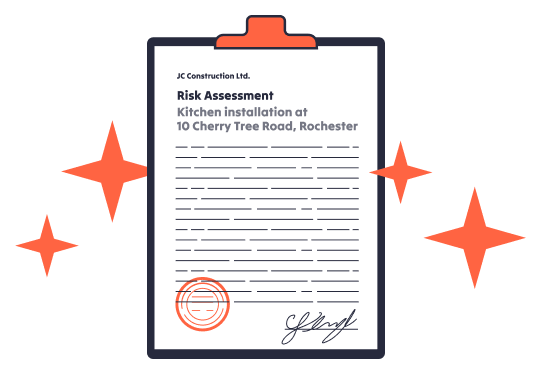
3. Instant Download and Use
Download immediately. Share with the venue, keep on file, or provide to event organisers.
What It Covers
Every DJ risk assessment is written in full — covering the specific equipment, venue, and audience you describe.
Electrical equipment safety — decks, mixers, amplifiers, lighting rigs
Cable management and trip hazards
Noise levels and hearing damage risk
Crowd safety and management
Smoke machines, haze and atmospheric effects
Manual handling — flight cases, speakers, subwoofers
Working in unfamiliar venues
Lone working setup and breakdown
Alcohol in the audience
Children attending the event
Works For
Whether you’re playing a school disco or a festival stage, Anyrisks covers every DJ environment.
What Customers Say
"Venues have started asking for risk assessments before they’ll book you. Anyrisks gets it done in minutes — electrical and cable sections are exactly what venues want to see."
Craig M.
Mobile DJ, North West
"Used it for a wedding where children were attending. The assessment covered crowd separation, noise levels, and smoke machine safety — the venue was really impressed."
Steph R.
Wedding DJ, South East
"I do a lot of festival work and the manual handling section for flight cases and subs was thorough. Really useful for lone setup and breakdown too."
Dan W.
Festival DJ, Midlands
Join thousands of UK businesses getting risk assessments done in minutes.
You’ll be delighted with your Risk Assessment, or your money back.
Anyrisks vs DIY Templates
| Anyrisks | DIY / Templates | |
|---|---|---|
| Written in full — not a blank form | ✓ | ✗ |
| Noise and hearing damage controls included | ✓ | ✗ |
| Electrical and cable safety covered | ✓ | ✗ |
| Specific to your setup and venue | ✓ | ✗ |
| Ready in under 2 minutes | ✓ | ✗ |
| Instant download | ✓ | Sometimes |
Frequently Asked Questions
Is a risk assessment a legal requirement for a DJ or mobile entertainer?
Yes. Regulation 3(1) of the Management of Health and Safety at Work Regulations 1999 requires all self-employed persons and employers to carry out a suitable and sufficient risk assessment. Most venue contracts and event insurance policies also require a current risk assessment before performing. Section 3 of the HSWA 1974 extends the duty of care to event attendees.
Does my DJ risk assessment need to cover noise risks?
Yes. The Control of Noise at Work Regulations 2005 set the lower exposure action value at 80 dB(A) daily average. DJs regularly exceed this threshold. Regulation 7 requires a noise risk assessment; Regulation 8 requires hearing protection to be available at or above 80 dB(A). Anyrisks DJ assessments include a noise exposure section and hearing protection controls.
My venue requires a PAT test certificate — is that different from a risk assessment?
Yes. A PAT test is a separate electrical safety inspection of your equipment required under PUWER Regulation 5 (maintenance records) and by most venues under their insurance conditions. A risk assessment is a broader document covering all hazards including electrical equipment, manual handling, noise, and lone working. Both are typically required.
I'm a mobile DJ working alone to set up and break down — is lone working covered?
Yes. Section 2 of the HSWA 1974 and Regulation 3 of MHSWR 1999 require lone working risks to be assessed. Describe your solo setup procedure and the assessment will include lone working controls, check-in protocols, and manual handling controls for heavy speaker stacks and flight cases under MHOR 1992.
Does it cover smoke machines and atmospheric effects?
Yes. Describe the atmospheric effects equipment you use and the assessment will include controls for smoke machine chemicals (COSHH 2002), CO2 or cryogenic effects (asphyxiation and confined space risks), and low-level haze in high-occupancy venues.
How long does it take?
Under 2 minutes. Describe your DJ setup and Anyrisks produces a fully written risk assessment instantly, including PDF and Word download.
DJ Risk Assessments and UK Law
Your legal duties as a DJ or mobile entertainer in the UK.
MHSWR 1999 and HSWA 1974
Regulation 3(1) of the Management of Health and Safety at Work Regulations 1999 requires all self-employed persons and employers to carry out a suitable and sufficient risk assessment. Section 3 of the HSWA 1974 extends the duty of care to members of the public — including event attendees. DJs working at venues or events are covered by both provisions regardless of whether they are employed or self-employed.
Control of Noise at Work Regulations 2005
The Control of Noise at Work Regulations 2005 set lower action values at 80 dB(A) and upper action values at 85 dB(A) for daily noise exposure. DJs regularly exceed these thresholds. Regulation 7 requires noise risk assessments; Regulation 8 requires hearing protection to be provided at or above the lower action value. Regulation 9 requires health surveillance for employees regularly exposed above the upper action value.
PUWER 1998 and Electrical Safety
PUWER Regulation 4 requires all DJ equipment to be suitable for its intended use. Regulation 5 requires maintenance and inspection records. Portable appliance testing (PAT) is required by most venues and event insurers before equipment may be connected to their power supply. Visual checks before each set-up are a minimum requirement. Anyrisks DJ assessments include a dedicated electrical safety section referencing PUWER requirements.
Lone Working and MHOR 1992
DJs often work alone when setting up and breaking down heavy equipment including speaker stacks, sub-woofers, and flight cases. Section 2 of the HSWA 1974 and MHSWR Regulation 3 require lone working risks to be assessed and controlled. The Manual Handling Operations Regulations 1992 (MHOR) apply to lifting and carrying equipment. Assessments must address load weights, carrying distances, and working in unfamiliar venues or outdoor settings.
Related Risk Assessments
Event Risk Assessment
For events where you are performing — covers crowd safety, SAG process, and RRO 2005.
Music Festival Risk Assessment
For festival performances — covers temporary structures, crowd density, HSG195, and welfare facilities.
Lone Worker Risk Assessment
For solo set-up and breakdown — covers lone working procedures, check-in protocols, and MHOR 1992.