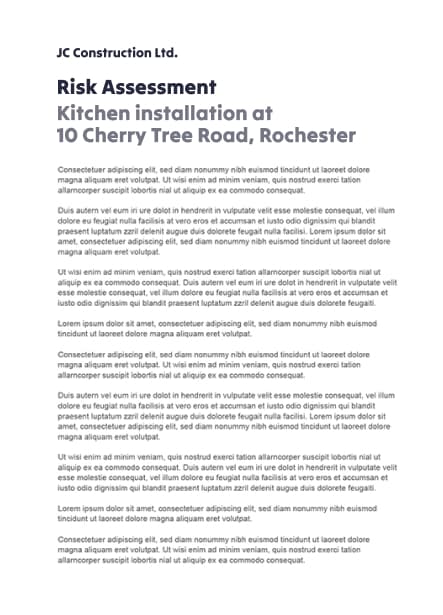
Small businesses often operate with limited resources, tight budgets, and minimal staffing — making risk assessment seem overwhelming. However, conducting risk assessments is not only a legal requirement in many jurisdictions, but a critical step to protect employees, customers, and business continuity.
Why Risk Assessment is Crucial for Small Businesses
- Legal Compliance: In the UK, businesses with employees are required to perform risk assessments. Non-compliance can lead to fines or business disruption.
- Employee Safety: Protecting employees reduces accidents, absenteeism, and improves morale.
- Business Continuity: Identifying risks early helps prevent costly incidents that can harm your reputation or result in operational shutdowns.
- Customer Trust: Demonstrating a commitment to safety builds confidence among clients and stakeholders.
Common Challenges Small Businesses Face
- Lack of dedicated health and safety personnel
- Limited time and expertise to conduct detailed assessments
- Perceived complexity and volume of paperwork
- Difficulty identifying relevant hazards specific to their industry and size
- Keeping up with ever-changing legal regulations
Simple Solutions Using Anyrisks
1. AI-Powered Risk Assessment — No Expertise Required
Anyrisks offers a user-friendly AI platform that enables small businesses to complete fast, guided risk assessments without specialist knowledge, automatically generate professional and compliant safety reports, access industry-specific templates tailored for small business needs, and update assessments easily as the business evolves.
2. Focus on the Key Hazard Areas
Rather than attempting exhaustive assessments, concentrate on common small business risks: slips, trips, and falls; fire safety and emergency planning; manual handling and ergonomics; chemical and electrical safety; and customer and public safety on business premises.
3. Integrate Risk Assessment into Daily Operations
Make risk management part of your routine by assigning safety responsibilities among existing employees, providing basic training and awareness sessions, monitoring hazards regularly and acting promptly on issues, and keeping clear records of assessments, incidents, and actions taken.
4. Leverage Simple Digital Documentation
Digital solutions reduce paperwork significantly. Generate and store electronic reports via Anyrisks, and share them effortlessly with staff and regulators when needed. Reports are delivered as both a PDF and a fully editable Word document.
Real-World Impact
Small retail and service businesses using Anyrisks have reported: reduced administrative burden by up to 60%, improved safety compliance during inspections, enhanced workplace safety awareness across their teams, and lower insurance premiums and claims through better risk management.
Practical Tips for Small Business Risk Assessment
- Start simple and expand gradually as your understanding grows
- Engage employees to identify hazards and practical solutions
- Use checklists and templates designed specifically for small businesses
- Schedule regular reviews annually or after incidents
- Seek expert help or training when necessary to complement digital tools
Risk assessment doesn't have to be complicated or costly. Small businesses can adopt straightforward, AI-powered solutions to overcome big challenges in safety management — ensuring compliance, protecting their people, and supporting sustainable growth. Visit Anyrisks today and see how easy risk assessment can be.