
Home › Bread and Pastry Market Stall Risk Assessment
Bread and Pastry Market Stall Risk Assessment — Generated Instantly for £29
Describe your stall — bread, patisserie, cream cakes, transport method and display setup. We generate a fully written, UK-compliant risk assessment covering temperature control, cream product handling, allergens and transport in minutes.
Used by bakers, patisserie chefs and market traders across the UK

🥐 Selling fresh cream eclairs or gateaux? Mention it — we'll include the specific chilled-holding, time-limit and cross-contamination controls required for dairy cream products at open-air stalls.
Legal requirements for market stall bakers
Trading as a bread and pastry stallholder makes you a food business operator under Regulation (EC) 852/2004 and the Food Safety Act 1990. You must register with your local authority and comply with the Food Hygiene Regulations, which cover temperature control, cross-contamination and staff hygiene — all directly relevant to handling cream, custard and other perishable fillings at an open stall.
Under Regulation 3(1) of the Management of Health and Safety at Work Regulations 1999, you must also carry out a general health and safety risk assessment covering manual handling of stock and equipment, gazebo or stall structure stability, hot equipment if baking or finishing on-site, and slips from spilt flour, glazes or wet weather. Most markets and event organisers will not allow you to trade without seeing this written assessment — see our guide on risk assessment legal requirements for a full breakdown of when a written document is required.
Fresh cream and custard-filled products are classed as high-risk foods. The Food Standards Agency's Safer Food Better Business guidance requires these to be held below 8 degrees Celsius and displayed for a limited time only, with clear time-tracking if refrigeration is not available throughout. Transport of baked goods also brings manual handling and vehicle loading risks that should be documented alongside your food safety controls. If you are unsure whether your stall setup needs a formal assessment, our page on do I need a risk assessment explains exactly when one is legally required.
How it works

1. Describe your stall
Tell us your products (bread, croissants, cream cakes, patisserie), whether you bake on-site or transport from a bakery, and your display and transport setup. Our AI risk assessment generator uses this to build a tailored document.

2. Let the app take the strain
Anyrisks produces a fully written risk assessment covering temperature control, cream product handling, allergens, transport and stall safety — referenced against UK food safety and health and safety law.
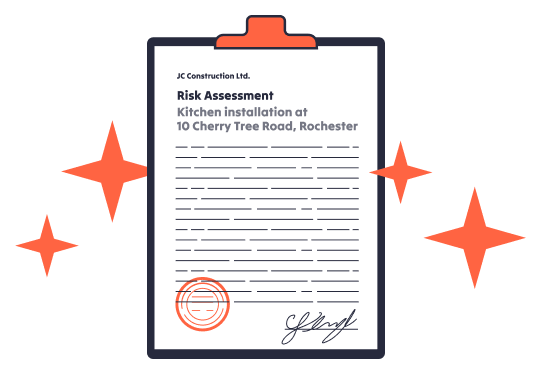
3. Instant download and use
Download as PDF and Word. Show it to the market or event organiser, your local authority, or keep it on file for your food hygiene inspection. £29, no subscription.
What it covers
Every bread and pastry market stall risk assessment is written in full, covering the specific hazards of baking, filling and transporting fresh goods.
Temperature control for cream and custard-filled products
Time limits for high-risk food display without refrigeration
Cross-contamination between raw ingredients and finished bakes
Allergen management — gluten, egg, milk, nuts, sulphites
Safe transport of trays, crates and cakes to and from the pitch
Manual handling of flour sacks, dough and equipment
Hot surface and burn risk from ovens, provers or glazing torches
Slips from spilt flour, icing sugar or wet weather underfoot
Gazebo and stall structure stability in wind and rain
Electrical safety for chillers, ovens and lighting on-site
Personal hygiene and handwashing facilities at the stall
Waste disposal and pest control around perishable stock
Cash handling and till security at an open stall
Fire risk from portable heating or cooking equipment
Works for
From artisan sourdough to French patisserie, Anyrisks covers every type of baked goods stall.
What customers say
"I sell fresh cream eclairs at three markets a week and the organisers always ask for a risk assessment. This one nailed the temperature and time-limit rules for the cream fillings straight away."
Camille D.
Patisserie stallholder, Bristol
"We transport hundreds of loaves in the van every Saturday and the assessment picked up on the manual handling and loading risks I hadn't thought to write down properly."
Owen T.
Artisan baker, Cardiff
"Our farmers market pitch needed a written assessment before we could trade. It covered allergens, the gazebo setup and our chiller box for cream cakes — done in minutes."
Priya N.
Market bakery trader, Leeds
Anyrisks vs DIY templates
| Anyrisks | DIY / templates | |
|---|---|---|
| Written in full — not a blank form | ✓ | ✗ |
| Cream and custard temperature controls specific to your stall | ✓ | ✗ |
| Allergen and cross-contamination guidance for baked goods | ✓ | ✗ |
| Transport and manual handling risks included | ✓ | ✗ |
| Food Safety Act 1990 and MHSWR 1999 referenced | ✓ | ✗ |
| Covers indoor and outdoor market setups | ✓ | ✗ |
| Ready in under 2 minutes | ✓ | ✗ |
| Instant PDF and Word download | ✓ | Sometimes |
Frequently asked questions
Do I need a risk assessment for a bread and pastry market stall?
Yes. Under Regulation 3(1) of the Management of Health and Safety at Work Regulations 1999, anyone running a business with employees — or trading from a market stall as a food business operator — must carry out a suitable and sufficient risk assessment. Most market and event organisers also require a written risk assessment before you can trade, alongside your food hygiene registration and public liability insurance.
Does this cover cream-filled patisserie products specifically?
Yes. Describe that you sell cream cakes, eclairs or cream-filled patisserie and the assessment will include the specific temperature control, cross-contamination and high-risk food handling requirements under the Food Safety Act 1990 and Regulation (EC) 852/2004 that apply to dairy cream products.
What temperature should cream products be held at on the stall?
Food Standards Agency guidance requires high-risk foods such as fresh cream products to be held at or below 8 degrees Celsius (chilled foods below 5 degrees Celsius is best practice), with a maximum out-of-refrigeration display time — typically no more than 4 hours — before the product must be discarded or returned to refrigeration. Your assessment will document the temperature monitoring and time controls you use.
Does it cover transporting baked goods to the market?
Yes. Describe your transport method (van, trolley, insulated boxes) and the assessment will cover manual handling of trays and crates, secure loading to prevent breakages, temperature maintenance in transit for chilled items, and the general risks of loading and unloading at the pitch.
Are burns and oven hazards covered even though baking happens off-site?
Yes. If you also bake or finish products (such as glazing or proving) at the stall or in a mobile unit, mention this and the assessment will include hot surface, steam and burn hazards alongside the standard proving, cooling and display risks.
Is this suitable for both indoor market halls and outdoor markets?
Yes. Describe whether you trade indoors, outdoors, or under a gazebo and the assessment will reflect the relevant hazards — including weather protection, gazebo stability, and access to electricity or water where applicable.
Will it cover allergen management for baked goods?
Yes. Baked goods commonly contain gluten, eggs, milk, nuts and sulphites. The assessment addresses allergen labelling and cross-contamination controls required under Regulation (EU) 1169/2011 (Food Information for Consumers) as retained in UK law.
How long does it take to generate?
Under 2 minutes. Describe your stall setup, products and how you transport and display them, and Anyrisks produces a complete, regulation-referenced risk assessment instantly as PDF and Word.
Also see: The ultimate guide to risk assessment · Do I need a risk assessment · Risk assessment legal requirements · AI risk assessment generator