
Home › Shopfront Shutter and Roller Door Repair Risk Assessment
Shopfront Shutter and Roller Door Repair Risk Assessment — Generated Instantly for £29
Describe the shutter or roller door job — repair, installation, motorised mechanism, working hours and site conditions. We generate a fully written, UK-compliant risk assessment covering working at height, heavy moving components and roadside working in minutes.
Used by shutter and roller door engineers, access equipment installers and shopfront maintenance contractors across the UK

🚧 Attending an emergency callout or working on a busy pavement? Mention it — we'll include rapid on-site risk evaluation, pedestrian exclusion zones and lone working controls specific to your job.
Legal requirements for shutter and roller door engineers
The Health and Safety at Work etc. Act 1974 and the Management of Health and Safety at Work Regulations 1999 require every employer and self-employed person to carry out a suitable and sufficient risk assessment before starting work. For shutter and roller door engineers, this means assessing the risks of working at height on shopfronts, handling heavy sprung and motorised components, and working in or near public spaces such as pavements and roads.
Where a job involves working from ladders, towers or mobile elevating work platforms to reach shutter boxes and guide rails, the Work at Height Regulations 2005 apply directly, requiring that work at height is properly planned, supervised, and carried out with suitable equipment. Where powered machinery such as tubular motors, chain drives and control gear is involved, the Provision and Use of Work Equipment Regulations 1998 require that equipment is maintained in an efficient state, properly guarded, and only used by trained personnel.
A written risk assessment is routinely requested by shop landlords, letting agents, facilities managers and principal contractors before work begins, and is expected by the HSE if an incident occurs. Anyrisks generates a document tailored to this specific trade, referencing the correct regulations for the job described.
How it works

1. Describe the job
Tell us whether it's a repair, service or installation, the type of mechanism, the access method, and whether it's a scheduled job or an emergency callout. If you're working roadside or after hours, mention it and we'll include the relevant controls.

2. Let the app take the strain
Anyrisks produces a fully written, UK-compliant risk assessment referencing the Work at Height Regulations 2005 and PUWER 1998 where relevant to your job.
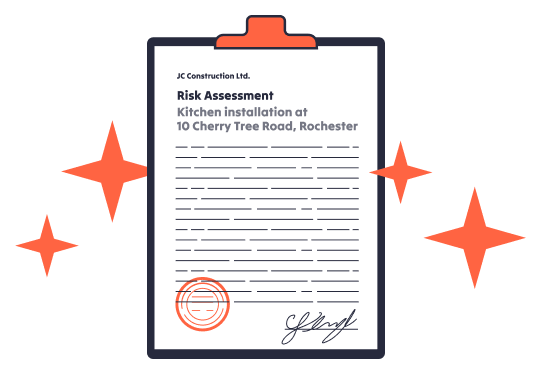
3. Instant download and use
Download as PDF and Word. Hand it to the shop landlord, include it in your job pack, or keep it on file for HSE and insurance purposes. £29, no subscription.
What it covers
Every shutter and roller door risk assessment is written in full — covering the mechanical, height and public-realm hazards specific to this trade.
Working at height on shopfronts — ladders, towers and MEWPs
Crushing and impact risk from heavy shutter curtains and boxes
Stored energy risk from tensioned springs and torsion bars
Entanglement risk from chain drives and rotating shafts
Electrical isolation of motorised shutters before repair
PUWER 1998 compliance for maintenance and guarding
Manual handling of shutter slats, tracks and motors
Pedestrian and traffic management on pavements and roads
Lone working during emergency and out-of-hours callouts
Risks of attending unfamiliar sites at short notice
Weather-related risks — wind, rain and low light conditions
Securing partially collapsed or jammed shutters safely
Noise exposure from power tools and grinding equipment
COSHH — lubricants, sealants and metal dusts
Works for
From scheduled servicing to emergency callouts, Anyrisks covers every type of shutter and roller door work.
What customers say
"Half my jobs are emergency callouts to jammed shutters on the high street. Anyrisks gave me a document that actually covers the roadside and out-of-hours risks, not a generic template."
Danny R.
Shutter and roller door engineer, Leeds
"Landlords now want a risk assessment before we touch anything on their retail units. This one covered the spring tension, the tower work and the pavement — sorted in minutes."
Kelly S.
Shopfront maintenance contractor, Manchester
"We service loading bay and shopfront shutters across the region. Being able to describe the mechanism and get the right PUWER references back instantly saves us a lot of admin time."
Owen T.
Access equipment installer, Bristol
Anyrisks vs DIY templates
| Anyrisks | DIY / Templates | |
|---|---|---|
| Written in full — not a blank form | ✓ | ✗ |
| Work at Height Regulations 2005 referenced | ✓ | ✗ |
| PUWER 1998 covered for motorised mechanisms | ✓ | ✗ |
| Roadside and pedestrian management included | ✓ | ✗ |
| Covers scheduled work and emergency callouts | ✓ | ✗ |
| Stored energy and spring tension risks addressed | ✓ | ✗ |
| Ready in under 2 minutes | ✓ | ✗ |
| Instant PDF and Word download | ✓ | Sometimes |
Frequently asked questions
Do shutter and roller door engineers need a separate risk assessment from fire door installers?
Yes. Shopfront shutter and roller door work involves motorised mechanisms, heavy overhead components, working at height on shopfronts and frequent roadside working - none of which are covered by a fire door installation risk assessment. Anyrisks generates a document specific to this trade, covering the mechanical, electrical and public-realm hazards involved.
What legislation applies to shutter repair work?
The Health and Safety at Work etc. Act 1974 and the Management of Health and Safety at Work Regulations 1999 require a suitable and sufficient risk assessment for any work activity. Where work is at height, the Work at Height Regulations 2005 apply directly. Where powered machinery is involved, the Provision and Use of Work Equipment Regulations 1998 (PUWER) set out duties on maintenance, guarding and safe use.
Does the assessment cover working outside the shop before it opens or after it closes?
Yes - describe your working hours and we will include controls for low-light conditions, restricted pedestrian access, isolation of the building, and lone working where you are attending a site outside normal trading hours.
Can it cover emergency callouts?
Yes. Emergency callouts carry their own risks - unfamiliar sites, time pressure, jammed or partially collapsed shutters, and working without prior site information. Mention that the job is an emergency callout and the assessment will include specific controls for rapid on-site risk evaluation and safe temporary securing of the shutter.
Does it cover roadside and pavement working?
Yes - if you are working on a shopfront that borders a public pavement or road, mention this and the assessment will include pedestrian and traffic management controls, exclusion zones, signage and barrier requirements in line with Chapter 8 of the Traffic Signs Manual where relevant.
Is working at height on shopfronts covered?
Yes. Shutter box and guide rail work often requires ladders, mobile towers or MEWPs above head height on a shopfront. The assessment references the Work at Height Regulations 2005 and includes ladder safety, tower assembly checks and fall prevention measures specific to your access method.
Does the assessment address the electrical and mechanical risks of motorised shutters?
Yes - electric motors, drive chains, springs under tension and control gear all present crushing, entanglement and stored-energy risks. Describe the type of mechanism (tubular motor, chain drive, spring-assisted) and the assessment will include isolation procedures and mechanical hazard controls relevant to it.
How long does it take to generate?
Under 2 minutes. Describe the shutter or roller door job, the site conditions and your working hours, and Anyrisks produces a complete, regulation-referenced risk assessment instantly.
Also see: The Ultimate Guide to Risk Assessment · Do I Need a Risk Assessment · Risk Assessment Legal Requirements · AI Risk Assessment Generator