
Home› Climbing Wall & Bouldering Centre Risk Assessment
Climbing Wall & Bouldering Centre Risk Assessment — Generated Instantly for £29
Describe your facility — bouldering, top-rope, lead climbing or auto-belay, permanent centre or mobile wall. We generate a fully written, UK-compliant risk assessment covering falls, belaying, matting and busy participant areas in minutes.
Used by permanent climbing centres, bouldering gyms and mobile climbing wall operators across the UK

🧗 Running bouldering without ropes? Mention it — we'll include fall-to-matting controls, matting gap and compression checks, and the overhead hazard controls needed where boulderers land close to roped climbers.
Legal requirements for climbing walls and bouldering centres
Under the Health and Safety at Work Act 1974, operators of climbing walls and bouldering centres — whether a fixed-site facility or a mobile wall taken to schools and events — have a legal duty to protect employees, participants and visitors from foreseeable harm. The Management of Health and Safety at Work Regulations 1999 (MHSWR), under Regulation 3(1), require a suitable and sufficient risk assessment identifying hazards specific to falls from height, belaying failure, route setting and crowd management in busy session areas.
HSE data consistently shows that falls from height remain one of the most common causes of serious injury across leisure and sports activity venues, which is why matting specification, fall zones and supervision ratios need to be clearly documented rather than assumed. A written risk assessment is expected by insurers, local authorities, schools booking group sessions, and HSE inspectors alike — and is a legal requirement for any business with employees or members of the public on site.
Climbing centres also commonly follow guidance published by the Association of British Climbing Walls (ABC) covering matting standards, auto-belay maintenance and instructor ratios. While this guidance is not statutory, failure to follow recognised industry standards can be used as evidence of a failure to meet the general duty of care.
How it works

1. Describe your facility
Tell us whether you run bouldering, top-rope, lead climbing or auto-belay, whether your wall is permanent or mobile, and your typical participant groups (schools, members, parties, corporate events).

2. Let the app take the strain
Anyrisks produces a fully written, UK-compliant risk assessment covering falls, belaying, matting, route setting and crowd management, referencing MHSWR 1999 and the Health and Safety at Work Act 1974.
3. Instant download and use
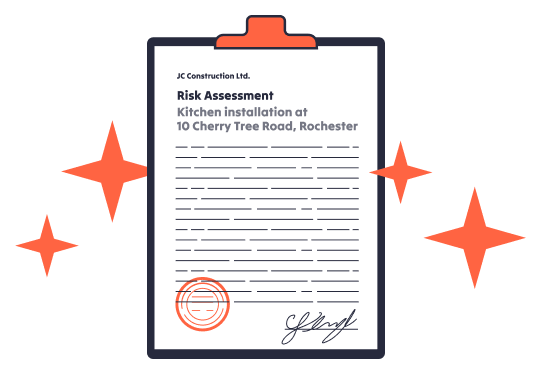
Download as PDF and Word. Use it for insurance, school and group bookings, local authority inspections, or your own compliance file. £29, no subscription.
What it covers
Every climbing wall and bouldering centre risk assessment is written in full — covering all falls, equipment and participant management hazards relevant to your site.
Falls from height onto crash matting — bouldering and roped climbing
Matting specification, gap coverage and compression checks
Belaying operations — partner checks and competency assessment
Auto-belay system inspection and manufacturer servicing schedules
Route setting hazards — working at height on the wall structure
Overhead hazards in busy mixed-use participant areas
Supervision ratios for junior and school group sessions
Harness, rope and karabiner inspection and retirement procedures
Floor and landing zone management around bouldering walls
Crowd management during busy sessions and events
Emergency procedures — falls, suspension trauma and first aid response
Mobile climbing wall rigging, transport and setup on school sites
Participant induction and safety briefing procedures
PPE requirements — helmets, harnesses and appropriate footwear
Works for
From permanent bouldering gyms to mobile climbing walls at schools and events, Anyrisks covers every type of climbing operation.
What customers say
"We run a mixed bouldering and roped wall and the assessment separated the two sets of risks properly — matting gaps for bouldering, belay checks for the roped side. Insurers were satisfied straight away."
Dan R.
Climbing centre manager, Sheffield
"I take a mobile wall to schools across the county. Schools always ask for a written risk assessment before I can set up, and this gives me something professional in two minutes instead of digging out an old template."
Chloe M.
Mobile climbing wall operator, Hampshire
"Route setting at height is something a lot of generic templates miss entirely. This covered it alongside our usual bouldering matting checks — exactly what we needed for our annual review."
Josh T.
Bouldering gym owner, Bristol
Anyrisks vs DIY templates
| Anyrisks | DIY / Templates | |
|---|---|---|
| Written in full — not a blank form | ✓ | ✗ |
| MHSWR 1999 and HSW Act 1974 referenced | ✓ | ✗ |
| Separates bouldering and roped climbing risks | ✓ | ✗ |
| Covers matting, belaying and auto-belay systems | ✓ | ✗ |
| Covers mobile wall setup at schools and events | ✓ | ✗ |
| Route setting and overhead hazards included | ✓ | ✗ |
| Ready in under 2 minutes | ✓ | ✗ |
| Instant PDF and Word download | ✓ | Sometimes |
Frequently asked questions
What regulations apply to climbing walls and bouldering centres?
Climbing walls and bouldering centres must comply with the Health and Safety at Work Act 1974 and the Management of Health and Safety at Work Regulations 1999 (MHSWR), which under Regulation 3(1) require a suitable and sufficient risk assessment covering falls, belaying, matting and crowd management. Many centres also follow guidance from the Association of British Climbing Walls (ABC) on best practice, though this is not itself law.
Do I need a risk assessment if I run a mobile climbing wall at schools and events?
Yes. Mobile and portable climbing wall operators are subject to the same duties under the Health and Safety at Work Act 1974 as permanent centres, and schools or event organisers will almost always ask to see your written risk assessment and public liability insurance before you set up.
Does this cover bouldering as well as roped climbing?
Yes — describe whether your wall offers bouldering (unroped climbing over crash matting), top-rope climbing, lead climbing, or auto-belay systems, and the assessment will address the specific fall and impact risks of each discipline separately.
Does it cover belaying and auto-belay devices?
Yes. The assessment covers manual belaying competency checks, partner checks before climbing, and the inspection and maintenance regime for auto-belay devices, including manufacturer servicing schedules and daily pre-use checks.
Is crash mat and matting inspection included?
Yes — matting condition, gap coverage, compression over time and correct matting for bouldering wall height are all addressed, reflecting the fact that most bouldering injuries result from poor landings rather than equipment failure.
Can I use this for a mix of adult and junior sessions?
Yes — describe your typical participant groups (school groups, junior climbing clubs, adult members, birthday parties) and the assessment will include supervision ratios and age-appropriate controls for each.
Will it cover route setting hazards?
Yes — risks to route setters working at height on the wall structure, including use of ladders or lifting platforms, fall prevention, and tool handling are included where you describe route setting as part of your operation.
How long does it take to generate?
Under 2 minutes. Describe your facility, climbing disciplines offered and typical participant groups, and Anyrisks produces a complete, regulation-referenced risk assessment instantly as PDF and Word.
Also see: The ultimate guide to risk assessment · Do I need a risk assessment? · Risk assessment legal requirements · AI risk assessment generator