
Home › Retail & Services › Dry Cleaning Risk Assessment
Dry Cleaning Risk Assessment — Generated Instantly for £29
A dry cleaning risk assessment must comply with COSHH, DSEAR and manual handling regulations, covering chemical solvents, pressing equipment, steam burns and fire risks. Describe your operation and we generate a fully written, UK-compliant assessment referencing all relevant legislation in minutes.
Used by independent dry cleaners, franchise operators and laundry services across the UK

🧪 Using perchloroethylene (perc) or hydrocarbon solvents? Mention it — we'll include COSHH exposure limits, ventilation requirements, skin contact controls, spillage procedures and safe storage in line with the Control of Substances Hazardous to Health Regulations 2002 and DSEAR 2002.
Legal requirements for dry cleaning businesses
The Control of Substances Hazardous to Health Regulations 2002 (COSHH) require employers to assess and control exposure to hazardous substances. For dry cleaners, this means assessing the risks from solvents such as perchloroethylene (tetrachloroethylene), hydrocarbon solvents and spot-cleaning agents. Regulation 6 requires adequate control measures, including local exhaust ventilation, containment, PPE and regular air monitoring where exposure limits apply.
The Dangerous Substances and Explosive Atmospheres Regulations 2002 (DSEAR) apply if you use flammable solvents or operate equipment that could present a fire or explosion risk. DSEAR requires a risk assessment identifying ignition sources, ensuring adequate ventilation, controlling hot surfaces and maintaining safe storage and handling procedures. Many hydrocarbon-based dry cleaning solvents are flammable and fall under DSEAR.
The Management of Health and Safety at Work Regulations 1999 place a general duty on all employers to carry out a suitable and sufficient risk assessment of work activities. For dry cleaners, this includes manual handling of garments and laundry bags, repetitive pressing work, slip and trip hazards from wet floors, and burns from steam and hot metal surfaces.
If you employ staff, the Health and Safety at Work Act 1974 requires you to provide a safe working environment. This includes training on safe solvent handling, emergency procedures for chemical spills, correct use of pressing equipment, and instruction on manual handling techniques. A written risk assessment is the foundation of compliance and is expected by HSE inspectors, landlords and insurers.
How it works

1. Describe your operation
Tell us the type of dry cleaning machine you use, the solvent (perc, hydrocarbon, or alternative), whether you offer pressing, spotting or fur cleaning, and if you run a collection and delivery service. If you work alone on delivery runs, mention it and we will include lone working controls.

2. Let the app take the strain
Anyrisks produces a fully written, UK-compliant dry cleaning risk assessment referencing COSHH, DSEAR, manual handling regulations and all relevant health and safety legislation.
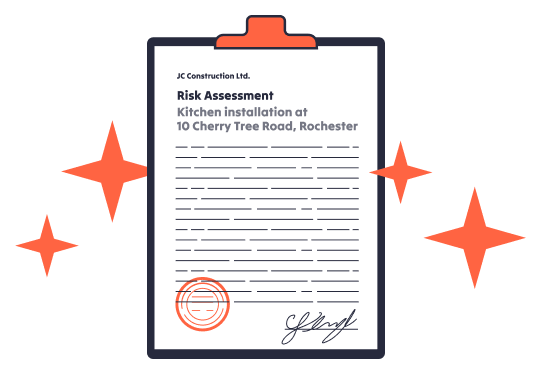
3. Instant download and use
Download as PDF and Word. Give it to your landlord, submit it to your insurer, display it for staff, or file it for HSE compliance. £29, no subscription.
What it covers
Every dry cleaning risk assessment is written in full — covering all chemical, mechanical and manual handling hazards relevant to your business.
COSHH — perchloroethylene (perc), hydrocarbon solvents, spot-cleaning agents
DSEAR — fire and explosion risk from flammable solvents
Ventilation and exposure control (local exhaust ventilation)
Skin contact and inhalation prevention — PPE requirements
Chemical spillage procedures and emergency response
Safe storage of solvents and contaminated garments
Steam burns from pressing and finishing equipment
Hot surface contact — pressing machines and irons
Repetitive strain injury from pressing and spotting work
Manual handling — lifting garment bags, loading machines
Slip and trip hazards from wet floors and trailing hoses
Lone working during collection and delivery runs
Fire risk from heat equipment and flammable materials
Customer interaction and violence or aggression (retail environment)
Works for
From high street dry cleaners to specialist fur and leather services, Anyrisks covers every type of dry cleaning operation.
What customers say
"My landlord wanted a COSHH assessment for the perc machine before renewing the lease. Anyrisks covered ventilation, spillage procedures, PPE and safe storage — exactly what was needed."
Rajesh P.
Dry cleaning business owner, Leicester
"We switched to hydrocarbon solvent and needed a new risk assessment covering fire risk. Anyrisks included DSEAR, ignition sources, ventilation and emergency procedures — all in one document."
Claire M.
Dry cleaning manager, Surrey
"I run a small shop with pressing and collection service. The assessment covered steam burns, manual handling and lone working on delivery rounds. Insurance company accepted it immediately."
David L.
Independent dry cleaner, Glasgow
Anyrisks vs DIY templates
| Anyrisks | DIY / Templates | |
|---|---|---|
| Written in full — not a blank form | ✓ | ✗ |
| COSHH assessment for dry cleaning solvents included | ✓ | ✗ |
| DSEAR fire and explosion risk covered | ✓ | ✗ |
| Steam burn and heat equipment hazards included | ✓ | ✗ |
| Manual handling and repetitive strain controls | ✓ | ✗ |
| Specific to your solvent type (perc, hydrocarbon, wet cleaning) | ✓ | ✗ |
| Ready in under 2 minutes | ✓ | ✗ |
| Instant PDF and Word download | ✓ | Sometimes |
Frequently asked questions
Does this cover COSHH for dry cleaning solvents?
Yes — describe the solvent you use (perchloroethylene, hydrocarbon, or alternative) and the COSHH assessment will include exposure controls, ventilation requirements, PPE, spillage procedures and safe storage in line with the Control of Substances Hazardous to Health Regulations 2002.
Does it cover steam pressing and heat hazards?
Yes — mention pressing equipment, steam finishing or spotting work and the assessment will include controls for steam burns, hot surface contact, repetitive motion injury and safe operation of pressing machines.
Can I use it for both shop-based and collection/delivery services?
Yes — describe your operation (fixed premises, mobile service, or both) and the assessment will cover manual handling during collection and delivery, vehicle safety, and lone working if applicable.
Does it reference the Dangerous Substances and Explosive Atmospheres Regulations (DSEAR)?
Yes — if you use flammable solvents or work with equipment that presents a fire or explosion risk, the assessment will reference DSEAR 2002 and include controls for ignition sources, ventilation, spill containment and emergency procedures.
Is it accepted by landlords and insurers?
Anyrisks produces a fully written, regulation-referenced risk assessment in the standard format expected by commercial landlords, insurance assessors and HSE inspectors. The format is professional and meets all UK compliance requirements.
How long does it take?
Under 2 minutes. Describe your dry cleaning operation, the solvents and equipment you use, and whether you handle collection and delivery, and Anyrisks produces a complete, UK-compliant dry cleaning risk assessment instantly.
Does it cover fur and specialist textile cleaning?
Yes — mention fur, leather, suede, wedding dresses or other specialist items and the assessment will include appropriate handling controls, solvent compatibility, storage conditions and customer care procedures.
Can I add multiple employees to the assessment?
Yes — the assessment is written for your business and covers all staff working in dry cleaning operations. You can edit the Word document to add specific names or job roles as required.
Also see: Ironing & Laundry Collection Service Risk Assessment · The Ultimate Guide to Risk Assessment · Do I Need a Risk Assessment? · Risk Assessment Legal Requirements · Risk Assessment Generator