
Home › Beauty & Salon › Laser Hair Removal Risk Assessment
Laser Hair Removal Risk Assessment — Generated Instantly for £29
Describe your laser system, treatment types and clinic setup. We generate a fully written, UK-compliant laser hair removal risk assessment covering laser safety, eye protection, skin burns and all relevant regulations in minutes.
Used by laser clinics, beauty salons and aesthetic practitioners across the UK

⚡ Using Class 3B or Class 4 lasers? Mention the classification, wavelength and power output — we'll include controlled area requirements, laser safety officer duties, eye protection specifications and emergency shut-off procedures required under BS EN 60825-1.
Legal requirements for laser hair removal clinics
The Health and Safety at Work Act 1974 and the Management of Health and Safety at Work Regulations 1999 require employers to conduct a risk assessment for all work activities. For laser hair removal clinics, this means documenting how you will manage risks from laser radiation, eye damage, skin burns, electrical hazards and client adverse reactions. A written risk assessment is expected by the HSE, local authorities and the Care Quality Commission (CQC) where the clinic is registerable.
Laser systems are classified under BS EN 60825-1:2014 (Safety of Laser Products). Class 3B and Class 4 lasers — the categories used for hair removal — pose a risk of serious eye injury and skin burns if misused. The standard requires that a laser safety officer is appointed, controlled areas are designated, warning signs are displayed, and appropriate eye protection is provided to staff and clients. The HSE's guidance Controlling the Risks from Laser Use reinforces these duties.
The Control of Artificial Optical Radiation at Work Regulations 2010 require employers to assess and control exposure to laser radiation. This includes determining maximum permissible exposure (MPE) levels, ensuring systems are maintained correctly, and providing training to operators. Failure to assess and control laser exposure is a breach of these regulations.
If your clinic is CQC-registered (for example, if you provide prescription-only treatments or injectables alongside laser services), the risk assessment forms part of your evidence for Regulation 12 (Safe Care and Treatment) under the Health and Social Care Act 2008 (Regulated Activities) Regulations 2014. Anyrisks assessments are written to support this compliance framework.
How it works

1. Describe your service
Tell us about your laser system (IPL, diode, Nd:YAG, alexandrite), power class, treatment areas (face, body, intimate), client types and clinic setup. If you operate a mobile service or work alone, mention it and we will include lone working controls.
2. Let the app take the strain
Anyrisks produces a fully written, UK-compliant laser hair removal risk assessment referencing BS EN 60825-1, the Control of Artificial Optical Radiation at Work Regulations 2010 and CQC requirements where applicable.
3. Instant download and use
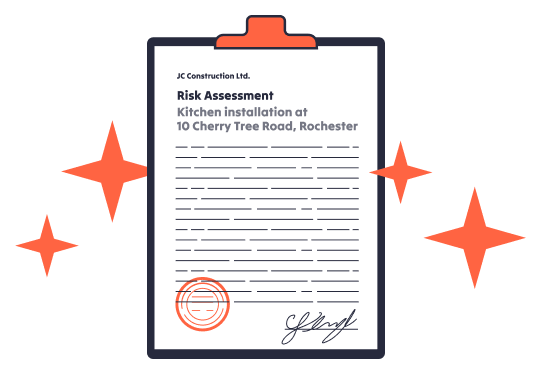
Download as PDF and Word. File it for CQC inspections, HSE visits, insurance renewals or local authority enquiries. £29, no subscription.
What it covers
Every laser hair removal risk assessment is written in full — covering all laser safety and client care hazards relevant to your clinic.
Laser radiation hazards — eye and skin damage risk
Laser classification and controlled area requirements
Eye protection — wavelength-specific safety glasses for staff and clients
Skin burns from incorrect settings or client Fitzpatrick type mismatch
Client contraindications and informed consent procedures
Patch testing and cooling protocols
Electrical safety — high-power equipment, PAT testing, earthing
Fire risk from flammable materials in treatment area
COSHH — cooling gels, antiseptic sprays, cleaning agents
Manual handling of treatment couches and equipment
Slips and trips in treatment rooms
Lone working for mobile laser practitioners
Staff training — Core 3 and 4 laser safety officer training
CQC Regulation 12 (Safe Care and Treatment) compliance support
Works for
From standalone laser clinics to beauty salons offering IPL, Anyrisks covers every type of laser hair removal service.
What customers say
"Our CQC inspection was coming up and we needed a proper laser safety risk assessment. Anyrisks covered controlled area requirements, eye protection specs and client consent — exactly what the inspector wanted to see."
Dr Amira Khan
Aesthetic clinic owner, Manchester
"I run a mobile laser hair removal service and needed something that covered working alone in clients' homes. Anyrisks included electrical safety, lone working checks and emergency procedures — all sorted in 2 minutes."
Lucy Thompson
Mobile laser technician, Surrey
"We use alexandrite and diode systems in the same clinic. Anyrisks let me specify both and the assessment covered wavelength-specific eye protection and power class differences. Really thorough."
James Mitchell
Laser clinic manager, Edinburgh
Anyrisks vs DIY templates
| Anyrisks | DIY / Templates | |
|---|---|---|
| Written in full — not a blank form | ✓ | ✗ |
| BS EN 60825-1 laser classification referenced | ✓ | ✗ |
| Control of Artificial Optical Radiation Regulations 2010 compliant | ✓ | ✗ |
| Eye protection specifications for wavelength | ✓ | ✗ |
| Covers IPL, diode, Nd:YAG and alexandrite systems | ✓ | ✗ |
| CQC Regulation 12 compliance support | ✓ | ✗ |
| Ready in under 2 minutes | ✓ | ✗ |
| Instant PDF and Word download | ✓ | Sometimes |
Frequently asked questions
Does this meet CQC requirements if I'm registered?
Yes — the assessment covers the specific hazards relevant to laser treatment clinics including laser classification, eye protection, skin burns and controlled area management. It is written to support CQC compliance where applicable.
Does it cover both IPL and laser systems?
Yes — describe the system type (IPL, diode, Nd:YAG, alexandrite) and power class and the assessment will be tailored. Laser and IPL systems have different hazard profiles and the controls reflect this.
Is patch testing covered?
Yes — if you mention patch testing procedures in your description, the assessment will include client skin sensitivity testing, consent procedures and waiting periods.
Can I use it for mobile laser hair removal services?
Yes — describe that you operate a mobile service and the assessment will cover transport of equipment, working in client homes, electrical safety in unfamiliar premises and lone working considerations.
Does it cover staff training requirements?
Yes — the assessment references the employer's duty under Regulation 13 of MHSWR 1999 to provide adequate training. Core 3 and 4 laser safety training for operators is highlighted where applicable.
How long does it take?
Under 2 minutes. Describe your laser system, treatment types and clinic setup and Anyrisks produces a complete, regulation-referenced laser hair removal risk assessment instantly.
Is electrical safety included?
Yes — laser and IPL systems are high-power electrical equipment. The assessment covers PAT testing, cable management, earthing, fuse protection and emergency isolation procedures.
Does it cover consent and client assessment?
Yes — client contraindications, informed consent, Fitzpatrick skin type assessment and cooling procedures are all covered as part of the safe system of work.
Also see: Mobile Spray Tanning Risk Assessment · The ultimate guide to risk assessment · Do I need a risk assessment? · Risk assessment legal requirements · Risk assessment generator