
Home › Manual Handling Risk Assessment
Manual Handling Risk Assessment — TILE Framework, Generated Instantly
Describe the lifting, carrying or pushing task. We generate a fully written, UK-compliant manual handling risk assessment using the TILE framework — in minutes.
Used by warehouses, construction firms, care homes, delivery teams and manufacturers across the UK. Also see: lone worker risk assessment

💪 Manual handling causes over a third of all workplace injuries in the UK. The Manual Handling Operations Regulations 1992 require a written assessment for any task involving significant risk — our generator covers it in under 2 minutes.
Legal Requirements for Manual Handling
The Manual Handling Operations Regulations 1992 (as amended) require employers to avoid hazardous manual handling where reasonably practicable, and where it cannot be avoided, to carry out a suitable and sufficient assessment of the risk. The HSE’s guidance document L23 sets out what a compliant assessment must cover.
The Regulations do not set a maximum weight limit — instead they require an assessment of all relevant factors. The HSE does provide guideline weights (25 kg for men, 16 kg for women in ideal conditions) but these are starting points, not hard limits. Your assessment must consider the actual task, individual, load and environment — this is the TILE framework.
For patient handling in care settings, additional guidance from the HSE and the NHS Manual Handling Passportscheme applies. For construction and warehousing, the Work at Height Regulations may also be relevant if handling occurs on platforms or at elevation.
The TILE Framework
Every Anyrisks manual handling assessment is structured around the HSE’s four-factor TILE framework — the recognised standard for manual handling risk assessment in the UK.
Task
What movements are involved? Repetitive lifting, awkward postures, twisting, reaching above shoulder height, carrying over distance, pushing or pulling?
Individual
Who is doing the task? Consider their capability, fitness, training, any known health conditions or pregnancy, and whether they have experience with this type of handling.
Load
What is being handled? Consider the weight, size, shape, stability and grip. Is it a person, a box, a bag, equipment, or something with no obvious grip points?
Environment
Where is the task happening? Consider the floor surface, space constraints, temperature, lighting, and any obstacles that affect how the task is carried out.
Describe your manual handling task in plain English and we apply the TILE framework automatically.
How It Works

1. Describe the Task
Tell us what’s being handled, how heavy, the environment, who’s doing it, and how often. Plain English is fine — no jargon required.
2. Let the app take the strain
Anyrisks produces a fully written assessment using the TILE framework, referencing the Manual Handling Operations Regulations 1992 and HSE guidance.
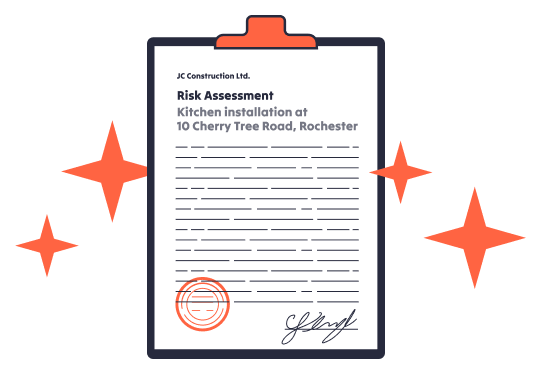
3. Instant Download and Use
Download as PDF and Word. File it, share it with your team, or present it at an HSE inspection. £29, no subscription.
What It Covers
Every manual handling risk assessment is written in full — structured around the TILE framework and tailored to your task.
TILE framework assessment (Task, Individual, Load, Environment)
HSE guideline weights and when they apply
Repetitive lifting and cumulative load exposure
Team lifts — co-ordination and communication
Musculoskeletal injury risk and prevention
Awkward postures: twisting, bending, reaching
Pushing and pulling (wheeled loads, trolleys, cages)
Patient and people handling in care environments
Mechanical aids and whether they’re available
Training requirements for handlers
Monitoring and review periods
Manual Handling Operations Regulations 1992 compliance
Works For
Any industry where employees lift, carry, push or pull — manually.
What Customers Say
“Our warehouse team was lifting awkward stock daily with no documented assessment. Anyrisks covered the TILE framework for every major task within an hour.”
Daniel R.
Warehouse manager, Northampton
“We needed patient handling assessments for our care home. Anyrisks produced detailed, specific documents for each type of transfer — far better than our old blank forms.”
Sarah O.
Care home manager, Leeds
“HSE inspector asked to see our manual handling assessments during a site visit. The Anyrisks documents covered everything they expected and we had no issues.”
Paul F.
Construction site manager, Glasgow
Anyrisks vs DIY Templates
| Anyrisks | DIY / Templates | |
|---|---|---|
| Written in full using the TILE framework | ✓ | ✗ |
| References Manual Handling Operations Regulations 1992 | ✓ | ✗ |
| Covers task-specific hazards (not generic) | ✓ | ✗ |
| Patient handling and care environments included | ✓ | ✗ |
| Pushes and pulling loads covered (not just lifting) | ✓ | ✗ |
| Ready in under 2 minutes | ✓ | ✗ |
| Instant PDF and Word download | ✓ | Sometimes |
Frequently Asked Questions
Does this follow the TILE framework?
Yes — every manual handling assessment is structured around the HSE’s four TILE factors: Task, Individual, Load and Environment. This is the recognised standard for manual handling assessments in the UK.
Is there a legal maximum weight for lifting?
No. The Manual Handling Operations Regulations 1992 do not set a legal maximum weight. The HSE provides guideline figures (25 kg for men, 16 kg for women in ideal conditions) but the Regulations require assessment of all relevant factors, not just weight.
Can I use this for patient handling in a care home or hospital?
Yes — describe the type of transfer or patient care activity (e.g. hoist use, assisted walking, repositioning) and we’ll produce a compliant assessment for that specific task.
Does it cover pushing and pulling loads, not just lifting?
Yes — describe whether the task involves pushing trolleys, pulling cages, or moving wheeled loads, and the assessment will include the specific controls for those activities.
What industries does this cover?
All of them. Manual handling is relevant in warehousing, construction, healthcare, hospitality, retail, education, manufacturing, events and more. Describe your specific task and we tailor it accordingly.
How long does it take?
Under 2 minutes. Describe the manual handling task and Anyrisks produces a fully written, TILE-structured risk assessment instantly.