
Home › Top 10 Common Risks in the Workplace
Top 10 Common Risks in the Workplace — and How to Control Them
And how to manage them effectively — with actionable tips for every industry.
Generate Your Risk Assessment
Workplace safety is essential for protecting your employees, reducing operational disruptions, and maintaining legal compliance. Understanding the most common risks within your business allows you to proactively manage hazards and prevent accidents. Using Anyrisks AI-powered risk assessment platform, you can identify these hazards quickly and generate tailored safety reports.
Slips, Trips, and Falls
One of the leading causes of workplace injuries — often resulting from wet or uneven floors, poor lighting, obstructed walkways, or improper footwear.
Management Tips:
- Regularly inspect and maintain floors and walkways
- Use anti-slip mats and clear signage
- Keep work areas clutter-free
- Train staff on safe walking practices
- Provide appropriate footwear
Manual Handling Injuries
Lifting, carrying, pushing, or pulling heavy loads can cause musculoskeletal injuries if done incorrectly.
Management Tips:
- Provide manual handling training
- Use mechanical aids (trolleys, hoists)
- Assess risks for heavy or awkward loads
- Encourage team lifts when necessary
- Redesign tasks to minimise manual handling
Fire Hazards
Fires can cause catastrophic damage. Fire hazards include flammable materials, faulty electrical equipment, and poor housekeeping.
Management Tips:
- Conduct regular fire risk assessments
- Install and maintain fire detection and suppression systems
- Ensure clear escape routes and signage
- Train employees in fire safety and evacuation procedures
- Store flammable materials safely
Chemical Exposure
Exposure to hazardous substances can lead to illness or injury — particularly relevant in manufacturing, laboratories, and cleaning industries.
Management Tips:
- Maintain an up-to-date COSHH register
- Provide appropriate PPE (gloves, masks)
- Ensure proper storage and handling procedures
- Use substitution where possible
- Conduct training on chemical safety
Machinery Accidents
Moving parts, sharp edges, and pinch points on machinery pose significant risks to operators and nearby workers.
Management Tips:
- Install appropriate machine guards
- Ensure emergency stop features are functional
- Provide thorough operator training
- Conduct regular machine maintenance
- Implement lockout/tagout procedures
Electrical Hazards
Faulty wiring, overloaded circuits, and exposed electrical components can cause shocks, burns, or fires.
Management Tips:
- Conduct regular electrical inspections by qualified personnel
- Avoid overloading sockets and circuits
- Maintain safe distances from water sources
- Use residual current devices (RCDs)
- Train staff on electrical safety awareness
Workplace Stress
Psychosocial risks like excessive workloads, lack of support, and long hours impact mental health and productivity.
Management Tips:
- Promote work-life balance
- Encourage open communication and support networks
- Implement employee assistance programmes (EAPs)
- Monitor workloads and deadlines
- Provide training on stress management
Ergonomic Issues
Poorly designed workstations or repetitive tasks can cause musculoskeletal disorders, including back pain and carpal tunnel syndrome.
Management Tips:
- Conduct ergonomic assessments of workstations
- Provide adjustable chairs and desks
- Encourage regular breaks and exercises
- Rotate tasks to reduce repetitive strain
- Train employees on good posture and ergonomics
Violence and Aggression
Workplace violence, including verbal abuse and physical attacks, poses serious safety and legal issues across many sectors.
Management Tips:
- Establish clear anti-violence policies
- Provide conflict resolution and de-escalation training
- Implement secure access controls
- Offer support for affected employees
- Monitor and respond to risk indicators
Environmental Factors (Noise, Lighting, Temperature)
Excessive noise, poor lighting, and uncomfortable temperatures all affect health and work quality over time.
Management Tips:
- Provide hearing protection in noisy areas
- Ensure adequate and appropriate lighting
- Control temperature to maintain comfort and safety
- Conduct environmental risk assessments
- Maintain ventilation and air quality
Manage All These Risks in One Place
Combine practical risk controls with regular AI-generated assessments — the key to a safe work environment. Leverage our risk assessment tool to identify hazards specific to your workplace and generate customised reports instantly.
Get Started — £29 per AssessmentRelated guides:
Construction Risk Assessment · Fire Risk Assessment · Manual Handling Risk Assessment · Small Business Risk Assessment · Ultimate Guide to Risk Assessment · Do I Need a Risk Assessment? · Writing a Risk Assessment · Risk Assessment FAQ
Clients
Join our delighted customers




One simple price
It couldn't be easier to buy the perfect Risk Assessment for your needs
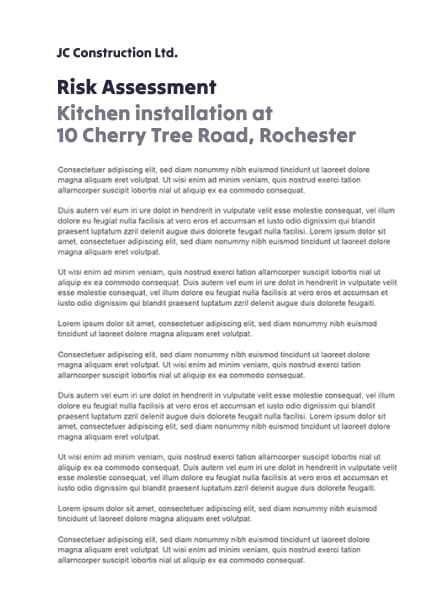
- Your instant, fully-customisable Risk Assessment, immediately ready to use
- Delivered as a download and emailed to you, both as a PDF, and a fully editable Word document
- Beautifully and professionally formatted
Need more than one?
Buy a block of credits upfront and save -- 5 for £99 or 10 for £149, no subscription.
See the Annual Plan →Need lots of Risk Assessments regularly?
Check out our Annual PlanSave your staff countless hours by turbo-charging the risk assessment process. Let them focus on what matters - creating a safer, more productive workplace.
Frequently Asked Questions
