
Home › Floor Fitter / Tiler Risk Assessment
Floor Fitter / Tiler Risk Assessment — Generated Instantly for £29
Describe the job — flooring type, tools, site, and property. We generate a fully written, UK-compliant risk assessment covering manual handling, COSHH, dust and slip hazards in minutes.
Built for self-employed floor fitters, tilers and small flooring contractors across the UK

🧱 Cutting tiles, sanding floors, or using strong adhesives? Mention it — we'll include the specific dust, COSHH and ventilation controls required for your materials and tools.
Legal requirements for floor fitters and tilers
The Management of Health and Safety at Work Regulations 1999 require every employer and self-employed worker to carry out a suitable and sufficient assessment of risks under Regulation 3(1). For floor fitters and tilers, this covers manual handling of heavy materials, cuts from tools, dust inhalation and slip hazards from wet adhesives and compounds.
The Control of Substances Hazardous to Health Regulations 2002 (COSHH) apply directly to the tile adhesives, grouts, primers, levelling compounds and sealants used daily in this trade. Many of these products release fumes or fine dust that can cause skin, eye and respiratory harm without proper ventilation and PPE controls.
The Manual Handling Operations Regulations 1992 also apply, given the regular lifting of tile pallets, flooring packs, screed bags and underlay. The Health and Safety at Work etc. Act 1974 underpins the general duty of care owed to clients, members of the public and anyone else affected by the work. A written risk assessment demonstrates compliance and is routinely requested by letting agents and main contractors before work can begin.
How it works

1. Describe the job
Tell us the material (tile, laminate, vinyl, carpet, screed), the tools you'll use, the property type, and whether it's an occupied home or a live commercial unit.

2. Let the app take the strain
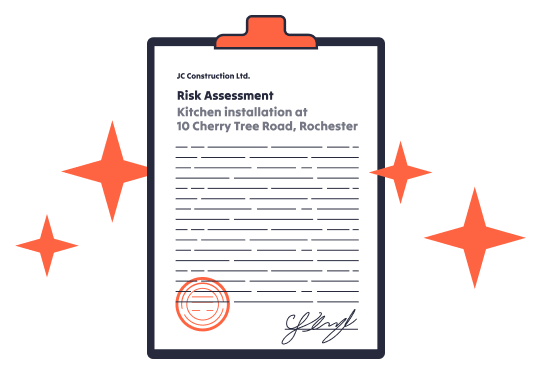
Anyrisks produces a fully written, UK-compliant risk assessment referencing COSHH, manual handling and general duty of care regulations relevant to your job.
3. Instant download and use
Download as PDF and Word. Hand it to your letting agent, main contractor or client, or file it for your own compliance records. £29, no subscription.
What it covers
Every floor fitter and tiler risk assessment is written in full — covering all materials, tools and site hazards relevant to your job.
Manual handling of tile pallets, flooring packs and screed bags
Dust from tile cutting, grinding and floor sanding
COSHH — adhesives, grout, primers and levelling compounds
Slip and trip hazards from wet adhesives and uncured compounds
Cuts and lacerations from tile saws, cutters and craft knives
Vibration exposure from power tools (HAVS)
Working in occupied domestic properties around residents and pets
Working in live commercial and retail environments
Kneeling and repetitive strain injury controls
Noise exposure from cutting and sanding equipment
Electrical safety when using mains-powered tools
Housekeeping and waste disposal — offcuts, packaging and debris
Fire risk from flammable adhesives and solvents
PPE requirements — gloves, knee pads, RPE and eye protection
Works for
From domestic bathroom tiling to commercial floor fit-outs, Anyrisks covers every type of flooring and tiling work.
Anyrisks vs DIY templates
| Anyrisks | DIY / Templates | |
|---|---|---|
| Written in full — not a blank form | ✓ | ✗ |
| COSHH for adhesives and grout referenced | ✓ | ✗ |
| Manual handling regulations covered | ✓ | ✗ |
| Dust and cutting hazard controls included | ✓ | ✗ |
| Covers domestic and commercial settings | ✓ | ✗ |
| Tailored to your specific tools and materials | ✓ | ✗ |
| Ready in under 2 minutes | ✓ | ✗ |
| Instant PDF and Word download | ✓ | Sometimes |
Frequently asked questions
Also see: The Ultimate Guide to Risk Assessment · Do I Need a Risk Assessment? · Risk Assessment Legal Requirements · AI Risk Assessment Generator
Does a floor fitter or tiler actually need a written risk assessment?
Yes — under Regulation 3(1) of the Management of Health and Safety at Work Regulations 1999, every self-employed tradesperson and employer must assess the risks of their work. Flooring and tiling involves manual handling, power tools, dust and slip hazards, so a written assessment is expected by letting agents, main contractors and commercial clients before work starts.
Does it cover COSHH for adhesives, grout and sealants?
Yes — tiling and flooring work involves adhesives, levelling compounds, grout and sealants that can release fumes or cause skin and respiratory irritation. The assessment references the Control of Substances Hazardous to Health Regulations 2002 (COSHH) and includes ventilation and PPE controls specific to the products you describe.
Does it cover the dust risk from cutting tiles and sanding floors?
Yes — dust from tile cutting, screed removal and floor sanding is a recognised respiratory hazard. Describe the cutting method (wet saw, angle grinder, sander) and the assessment will include on-tool extraction, RPE and COSHH control measures appropriate to the task.
Is manual handling of flooring materials included?
Yes — moving tile pallets, flooring packs, screed bags and underlay is a common cause of back injury in this trade. The assessment covers manual handling risks under the Manual Handling Operations Regulations 1992 and includes practical lifting and team-handling controls.
Can it cover working in occupied homes and commercial premises?
Yes — describe whether the job is in an occupied domestic property, a void commercial unit, or a live retail or office environment, and the assessment will reflect the specific hazards of working around members of the public, pets, and existing furnishings.
Does it cover slip and trip hazards during and after installation?
Yes — wet adhesive, uncured self-levelling compound, offcuts and trailing leads are major slip and trip hazards on flooring jobs. The assessment includes site housekeeping, signage and drying-time controls to manage these risks for the installer and anyone else on site.
Is it suitable for use on a self-employed subcontractor basis?
Yes — most flooring fitters and tilers work as self-employed subcontractors. The assessment is written in the standard format expected by principal contractors and letting agents, and can be reused across jobs with minor updates to the site details.
How long does it take to generate?
Under 2 minutes. Describe the flooring or tiling job — material, tools, location and property type — and Anyrisks produces a complete, regulation-referenced risk assessment ready to download as PDF and Word.