
Home › Experience Days › Metalworking & Knife Making Risk Assessment
Metalworking & Knife Making Risk Assessment — Generated Instantly for £29
Describe your knife making process — forging, grinding, heat treatment, machinery used, workshop layout and participant numbers. We generate a fully written, UK-compliant metalworking and bladesmithing risk assessment covering all machinery, hot work and public workshop hazards in minutes.
Used by bladesmiths, metalworkers, experience day providers and workshop operators across the UK

🔥 Running public knife making workshops? Mention participant numbers, age groups and supervision ratios — we'll include controls for public events, instruction procedures, emergency evacuation and public liability compliance.
Legal requirements for metalworking and knife making
The Health and Safety at Work Act 1974 requires all employers and self-employed people to assess and control risks to workers and members of the public. For knife making experience days and metalworking workshops, this means documenting how you manage risks from machinery, hot work, sharp edges, grinding dust and public participation.
Under Regulation 3 of the Management of Health and Safety at Work Regulations 1999, a suitable and sufficient risk assessment is a legal requirement. This applies whether you operate a commercial workshop, run occasional experience days, or provide knife making courses at a hired venue. The assessment must be written down if you employ five or more people, but written assessments are expected by insurers and venue owners in all cases.
The Provision and Use of Work Equipment Regulations 1998 (PUWER) apply to all metalworking machinery including belt grinders, pillar drills, lathes, angle grinders and bandsaws. Regulation 11 requires dangerous parts of machinery to be guarded or controlled to prevent access. This means blade guards, emergency stops, interlocked guards and dust extraction where appropriate. PUWER also requires that machinery is maintained and that operators are trained — critical when running public workshops.
If your knife making process involves grinding, drilling or forging, the Control of Substances Hazardous to Health Regulations 2002 (COSHH) apply. Metal dust from grinding and polishing, fumes from heat treatment, and oil mist from quenching are all hazardous substances requiring documented control measures. Failure to control dust exposure can result in occupational lung disease — HSE enforcement notices for inadequate dust extraction are common in metalworking settings.
If you run public workshops or experience days, you must also consider your duty of care to participants who may have no prior metalworking experience. This includes clear instruction, appropriate PPE, close supervision, and emergency procedures. Public liability insurers require evidence of suitable risk assessment before issuing cover for experience day activities involving machinery or hot work.
How it works

1. Describe your process
Tell us your knife making method (forging, stock removal, Damascus), machinery used (belt grinders, drill press, forge, heat treatment equipment), workshop layout, participant numbers and supervision arrangements. If you use specific processes like quenching or acid etching, mention them and we will include the relevant controls.
2. Let the app take the strain
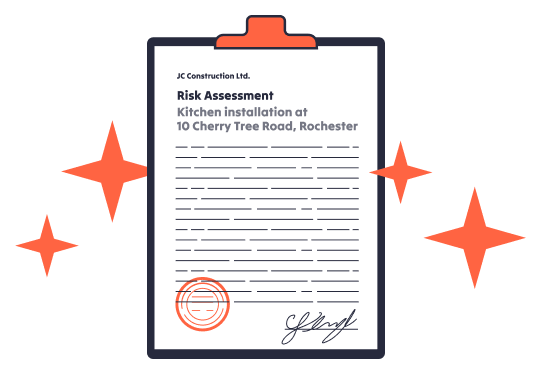
Anyrisks produces a fully written, UK-compliant metalworking and knife making risk assessment referencing PUWER, COSHH, the Health and Safety at Work Act and all relevant regulations.
3. Instant download and use
Download as PDF and Word. Provide it to your insurer, venue owner or local authority, display it in your workshop, or file it for compliance purposes. £29, no subscription, money-back guarantee.
What it covers
Every metalworking and knife making risk assessment is written in full — covering all machinery, hot work and public workshop hazards relevant to your operation.
Metalworking machinery — belt grinders, pillar drills, lathes, bandsaws
PUWER compliance — guarding, emergency stops, maintenance
Grinding and polishing — dust control, PPE, ventilation
Forging and bladesmithing — furnace operation, hot metal handling
Heat treatment — burns risk, quenching (oil, water, polymer), fume extraction
Sharp tools and blades — handling, storage, first aid
Manual handling — metal stock, anvils, heavy machinery
COSHH — metal dust, grinding fumes, quenching oil, acid etching
Fire risk — forge operation, oil quenching, hot work permits
Public workshops — instruction, supervision, participant PPE
Noise and vibration — hearing protection, tool-induced vibration
Emergency procedures — fire evacuation, first aid, injury reporting
Lone working — out-of-hours workshop use, emergency contact
Public liability — participant injury, safeguarding, insurance compliance
Works for
From one-day knife making courses to commercial bladesmithing workshops, Anyrisks covers every type of metalworking and knife making operation.
What customers say
"I run monthly knife making experience days in my workshop. Anyrisks gave me a complete risk assessment covering all my machinery, forging and public participation in one go. My insurer accepted it immediately."
Tom R.
Bladesmith, Yorkshire
"We hire village halls for knife making workshops and the venue owners always want to see our risk assessment. Anyrisks covered everything — machinery, dust extraction, participant supervision and emergency procedures."
Emma L.
Experience day provider, Cotswolds
"I teach Damascus forging and stock removal. The assessment covered heat treatment, quenching oil fire risk and grinding dust — all referenced to COSHH and PUWER. Exactly what I needed."
Mark D.
Metalworking instructor, Scotland
Anyrisks vs DIY templates
| Anyrisks | DIY / Templates | |
|---|---|---|
| Written in full — not a blank form | ✓ | ✗ |
| PUWER and COSHH compliance referenced | ✓ | ✗ |
| Covers forging, grinding and heat treatment | ✓ | ✗ |
| Public workshop controls included | ✓ | ✗ |
| Machinery guarding and dust extraction covered | ✓ | ✗ |
| Fire risk from quenching oil included | ✓ | ✗ |
| Ready in under 2 minutes | ✓ | ✗ |
| Instant PDF and Word download | ✓ | Sometimes |
Frequently asked questions
Does this cover bladesmithing and forging as well as stock removal?
Yes — describe your knife making method (forging, stock removal, grinding, heat treatment) and the assessment will cover the specific risks for your process. Forging introduces risks from furnaces, hot metal and hammering, while stock removal focuses on grinding, drilling and metalworking machinery.
What regulations does it reference?
The assessment references the Health and Safety at Work Act 1974, Management of Health and Safety at Work Regulations 1999, Provision and Use of Work Equipment Regulations 1998 (PUWER), Control of Substances Hazardous to Health Regulations 2002 (COSHH), and the Personal Protective Equipment at Work Regulations 1992. All are cited by name and regulation number.
Can I use it for knife making experience days and workshops?
Yes — this is one of the most common uses. If you run public workshops, mention participant numbers, supervision arrangements and whether participants are children or adults. The assessment will include appropriate controls for public events, including instruction, supervision and emergency procedures.
Does it cover metalworking machinery like belt grinders and pillar drills?
Yes — describe the machinery you use (belt grinders, angle grinders, pillar drills, bandsaws, lathes) and the assessment will include guarding requirements, PPE, dust extraction and the specific controls required under PUWER.
What about heat treatment and quenching?
Yes — if your process includes heat treatment, mention the furnace or forge type, quenching method (oil, water, polymer) and working temperatures. The assessment will cover burns risk, fume extraction, oil fire risk and safe quenching procedures.
Is it accepted by insurers and venue owners?
Anyrisks produces a fully written, regulation-referenced risk assessment in the standard format expected by public liability insurers, venue owners and event organisers. The format is professional and accepted across the industry.
How long does it take?
Under 2 minutes. Describe your knife making process, tools, machinery and workshop setup and Anyrisks produces a complete, regulation-referenced metalworking risk assessment instantly.
Can I edit it after download?
Yes — you receive a Word document as well as a PDF. You can edit, add your branding, and update the assessment as your process or workshop setup changes.
Also see: The ultimate guide to risk assessment · Do I need a risk assessment? · Risk assessment legal requirements · Risk assessment generator