
Home › Construction › Slate & Tile Roof Repair Risk Assessment
Slate & Tile Roof Repair Risk Assessment — Generated Instantly for £29
Describe the slate or tile repair job — fragile surface access, infilling an old window opening, heritage considerations. We generate a fully written, UK-compliant risk assessment covering fall protection, fragile roof hazards and all relevant regulations in minutes.
Used by roofing contractors, heritage builders and sole trader roofers across the UK

🏠 Infilling an old window or dormer opening on a slate roof? Mention it — we'll include structural void exposure, weatherproofing sequencing, and the fall protection required while the roof is open under the Work at Height Regulations 2005.
Legal requirements for slate and tile roof repairs
The Work at Height Regulations 2005 place specific duties on anyone working on a pitched roof. Regulation 9 requires that fragile surfaces — which slate and tile roof coverings are treated as unless proven otherwise — must not be worked on without suitable platforms, coverings or guard rails to prevent falls through the surface. Regulation 6 requires that access equipment such as roof ladders, crawling boards or scaffolding is used where a risk assessment shows it is needed.
Falls from height remain the leading cause of fatal injury to workers in the construction industry according to HSE statistics, and roof work is consistently among the highest-risk activities recorded. The Health and Safety at Work etc. Act 1974 requires every roofing job to be preceded by a suitable and sufficient risk assessment, and this is expected by principal contractors, building owners, insurers and the HSE for both large re-roofs and small repair jobs.
Where older cement fibre roofing components, felt or flashings may contain asbestos, the Control of Asbestos Regulations 2012 require a survey before work begins. On listed buildings or in conservation areas, planning conditions and heritage guidance also apply alongside the standard safety regulations, and slate matching or salvage techniques must be reflected in how the work is planned.
How it works

1. Describe the job
Tell us the roof pitch, access method, whether it is a repair, reslate or window infill, and any heritage or listed building considerations. Mention if the property has older materials that may contain asbestos.

2. Let the app take the strain
Anyrisks produces a fully written, UK-compliant risk assessment referencing the Work at Height Regulations 2005 and fragile roof surface controls specific to your job.
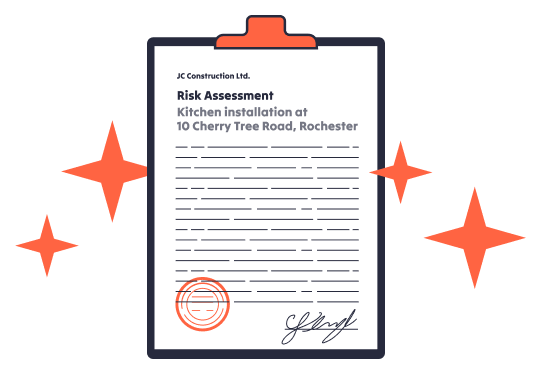
3. Instant download and use
Download as PDF and Word. Hand it to your client, principal contractor or building manager, or file it for insurance and compliance purposes. £29, no subscription.
What it covers
Every slate and tile roof repair risk assessment is written in full — covering fragile surface risks and every hazard specific to slate and tile work.
Fragile roof surface hazards and Regulation 9 controls
Roof ladders, crawling boards and staging platforms
Edge protection and fall arrest anchor points
Weather-related risk — wind, rain and slippery slate
Infilling old window and dormer openings safely
Structural timber exposure during infill work
Salvaging and matching slates on heritage properties
Manual handling of slates, tiles and battens at height
Falling object risk to people below the work area
Lead flashing work and hot works precautions
Asbestos risk in older cement fibre roofing components
Scaffold, tower and MEWP access requirements
Lone working controls for small repair jobs
Work at Height Regulations 2005 compliance
Timber decay and structural condition of old roof structures
Coordination with conservation officers on listed building work
Works for
From single slate replacement to full window infills, Anyrisks covers every type of slate and tile roof job.
What customers say
"I do a lot of small repair jobs on old slate roofs and clients now expect paperwork. This gave me a proper document covering fragile surface risk in about a minute, without me having to write it myself."
Gareth O.
Roofing contractor, Cardiff
"We were infilling an old dormer window on a listed cottage. The assessment covered the structural void, weatherproofing sequence and the heritage matching — exactly what our conservation officer wanted to see."
Diane K.
Heritage builder, Cotswolds
"As a one-man roofing outfit, I needed something quick that still referenced the Work at Height Regulations properly. Insurers and letting agents have accepted it without questions every time."
Tommy R.
Sole trader roofer, Newcastle
Anyrisks vs DIY templates
| Anyrisks | DIY / Templates | |
|---|---|---|
| Written in full — not a blank form | ✓ | ✗ |
| Work at Height Regulations 2005 referenced | ✓ | ✗ |
| Fragile roof surface controls included | ✓ | ✗ |
| Covers window and dormer infill sequencing | ✓ | ✗ |
| Heritage and listed building considerations | ✓ | ✗ |
| Asbestos considerations for older materials | ✓ | ✗ |
| Ready in under 2 minutes | ✓ | ✗ |
| Instant PDF and Word download | ✓ | Sometimes |
Frequently asked questions
Does this cover fragile roof surfaces specifically?
Yes — slate and tile roofs are treated as fragile surfaces under Regulation 9 of the Work at Height Regulations 2005 unless proven otherwise. The assessment includes crawling boards, roof ladders, staging, and edge protection appropriate to fragile roof coverings.
Can I use this for listed buildings or conservation areas?
Yes — describe the property as listed or in a conservation area and the assessment will reference heritage handling considerations, such as matching salvaged slates and minimising disturbance to surrounding fabric, alongside the standard safety controls.
Does it cover infilling old window openings on a roof slope?
Yes — describe the infill work (e.g. removing an old dormer or rooflight and reslating the opening) and the assessment will include structural timber exposure, weatherproofing sequencing, and fall risk while working around the open void.
Is asbestos in old roofing materials covered?
If your property has older cement fibre tiles, felt, or flashings that may contain asbestos, mention this and the assessment will reference the Control of Asbestos Regulations 2012 and the need for a survey before disturbing suspect materials.
Does it address working near roof edges without full scaffolding?
Yes — describe your access method (scaffold, tower, roof ladder, or MEWP) and the assessment will detail edge protection, anchor points, and fall arrest requirements specific to that method under the Work at Height Regulations 2005.
How is this different from a general roofing risk assessment?
Slate and tile repair involves fragile surface risk, brittle materials, and often specialist techniques like lead flashing and salvage matching that differ from flat roofing or general roofing work. This assessment is written specifically around slate and tile repair hazards.
Will it cover manual handling of slates and tiles?
Yes — the assessment includes manual handling of heavy roof coverings, safe lifting to height, and storage of materials on the roof slope to prevent slippage or falling objects.
How long does it take to generate?
Under 2 minutes. Describe the slate or tile repair job, including the roof type and access method, and Anyrisks produces a complete, regulation-referenced risk assessment instantly.
Also see: The Ultimate Guide to Risk Assessment · Do I Need a Risk Assessment · Risk Assessment Legal Requirements · Risk Assessment Generator