
Home › Telecoms / Broadband / Fibre Engineer Risk Assessment
Telecoms / Broadband / Fibre Engineer Risk Assessment — Generated Instantly for £29
Describe the fibre, broadband or telecoms job — pole access, underground ducting, cabinet work, or in-premises installation. We generate a fully written, UK-compliant risk assessment covering working at height, lone working and site-specific hazards in minutes.
Built for telecoms engineers, fibre installers, broadband subcontractors and network maintenance teams

📡 Working on poles, masts or near overhead power lines? Mention it — we'll include fall protection, exclusion zones for live electrical hazards, and the specific controls required under the Work at Height Regulations 2005.
Legal requirements for telecoms, broadband and fibre engineers
The Health and Safety at Work etc. Act 1974 places a general duty on employers and self-employed engineers to protect themselves and others from harm while carrying out installation and maintenance work. Under Regulation 3(1) of the Management of Health and Safety at Work Regulations 1999, every employer and self-employed person must carry out a suitable and sufficient assessment of risk before work begins.
Much telecoms and fibre work involves access to poles, masts, roof-level equipment and overhead cabling, meaning the Work at Height Regulations 2005 apply directly — requiring that work is properly planned, appropriate equipment is used, and fall prevention takes priority over fall arrest. Underground and duct work must also account for buried services and, where near live electrical infrastructure, the Electricity at Work Regulations 1989.
A written risk assessment is expected by network operators, principal contractors and site managers before work commences, particularly where work is carried out on public highways, in customer premises, or in proximity to overhead power lines. Anyrisks produces a fully written assessment referencing the relevant regulations for your specific job.
How it works

1. Describe the job
Tell us whether the work involves pole or mast access, underground ducting, cabinet installation or in-premises cabling, and any specific hazards (height, traffic, confined spaces). If you work alone on site visits, mention it and we will include lone working controls.

2. Let the app take the strain
Anyrisks produces a fully written, UK-compliant risk assessment referencing the Work at Height Regulations 2005 and other relevant legislation for your specific job type.
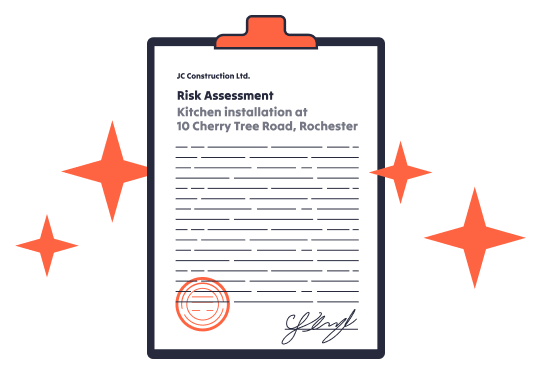
3. Instant download and use
Download as PDF and Word. Hand it to your network operator, principal contractor or site manager, or file it for compliance purposes. £29, no subscription.
What it covers
Every telecoms and fibre engineer risk assessment is written in full — covering all installation and site hazards relevant to your job.
Working at height on poles, masts and roof-level equipment
Ladder safety and fall arrest/prevention equipment
Proximity to overhead power lines — exclusion zones
Underground ducting — buried service strikes
Confined space working (ducts, chambers, risers)
Manual handling of cable drums and splicing equipment
Traffic management for street cabinet and highway work
Lone working on domestic and commercial site visits
Slips, trips and falls in customer premises
Use of hand and power tools (strippers, splicers, drills)
COSHH — solvents, adhesives and cable sealants
Electrical hazards near live power infrastructure
Weather exposure during outdoor pole and overhead work
Work at Height Regulations 2005 compliance
Works for
From pole-top splicing to in-home broadband set-up, Anyrisks covers every type of telecoms and fibre installation work.
Anyrisks vs DIY templates
| Anyrisks | DIY / Templates | |
|---|---|---|
| Written in full — not a blank form | ✓ | ✗ |
| Work at Height Regulations 2005 referenced | ✓ | ✗ |
| Covers pole, mast and overhead cable work | ✓ | ✗ |
| Covers underground duct and cabinet work | ✓ | ✗ |
| Overhead power line exclusion zones included | ✓ | ✗ |
| Lone working controls for site visits included | ✓ | ✗ |
| Ready in under 2 minutes | ✓ | ✗ |
| Instant PDF and Word download | ✓ | Sometimes |
Frequently asked questions
Does this cover working at height on poles and masts?
Yes — describe whether you work on telegraph poles, masts, chimney stacks or roof-level cabinets and the assessment will include working at height controls in line with the Work at Height Regulations 2005, including ladder safety, fall arrest and rescue planning.
Is overhead and underground cable work both covered?
Yes — tell us whether the job involves overhead fibre runs, duct and underground cable pulling, or in-building cabling, and the risk assessment will be tailored to the specific hazards of each, including third-party asset damage and street works.
Does it include electrical and street works hazards?
Yes — the assessment covers proximity to overhead power lines, buried services, traffic management for street cabinets, and the relevant precautions under the Electricity at Work Regulations 1989.
Can it cover lone working for engineers on domestic visits?
Yes — mention that you work alone on site visits and lone working controls, including check-in procedures and personal safety measures, will be included.
Is this suitable for subcontractors working for network operators?
Yes — Anyrisks produces a fully written, regulation-referenced risk assessment in the format expected by network operators, principal contractors and site managers for fibre and broadband installation work.
Does it cover work in customer premises?
Yes — describe whether work takes place inside domestic or commercial premises and the assessment will include slips, trips, equipment safety and customer interaction hazards relevant to in-home or in-office installation.
How long does it take to generate?
Under 2 minutes. Describe the telecoms, broadband or fibre installation job and Anyrisks produces a complete, regulation-referenced risk assessment instantly.
Does it include manual handling of cable reels and equipment?
Yes — the assessment covers manual handling of cable drums, ladders, test equipment and splicing kit in line with the Manual Handling Operations Regulations 1992.
Also see: The Ultimate Guide to Risk Assessment · Do I Need a Risk Assessment · Risk Assessment Legal Requirements · AI Risk Assessment Generator