
Home › Easter Fayre / Spring Fair Risk Assessment
Easter Fayre / Spring Fair Risk Assessment — Generated Instantly for £29
Describe your Easter fayre or spring fair — venue, stalls, egg hunt, cake sales, inflatables. We generate a fully written, UK-compliant risk assessment covering every hazard in minutes, ready to hand to your venue or insurer.
Built for PTAs, church and parish councils, village halls and community fundraising committees

🐣 Running an egg hunt, bouncy castle or cake stall alongside your fayre? Mention it — we'll include the specific supervision, inspection tag and food hygiene controls needed for each activity.
Legal requirements for community fayres and fairs
Under Regulation 3(1) of the Management of Health and Safety at Work Regulations 1999, organisations employing five or more people must record a suitable and sufficient risk assessment for any event they run. Section 3 of the Health and Safety at Work etc. Act 1974 also places a general duty on organisers to protect visitors, volunteers and the public from harm, regardless of headcount.
Most village halls, schools, churches and local councils now require a written risk assessment before they will confirm a booking, grant a licence for a stall area, or allow inflatables and gazebos on their land. Insurers arranging public liability cover for one-off community events also typically ask to see one as part of underwriting.
If you are selling food, the Food Safety Act 1990 and associated food hygiene regulations apply to cake stalls, barbecues and tea urns alike, and any inflatable play equipment should hold a valid PIPA or ADIPS inspection tag in line with HSE guidance. Not sure if your event needs one? Our guide explains who the duty applies to.
How It Works

1. Describe your event
Tell us the venue, indoor or outdoor layout, expected numbers, and any stalls or activities — raffle, tombola, egg hunt, cake sale, bouncy castle or live music. The more detail, the more tailored the assessment.

2. Let the app take the strain
Anyrisks produces a fully written, UK-compliant risk assessment referencing the relevant regulations, covering every hazard specific to your event layout and activities.
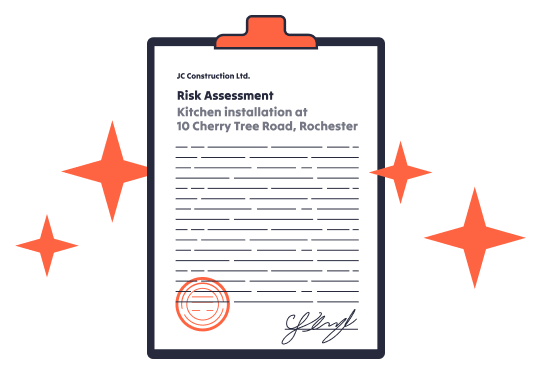
3. Instant download and use
Download as PDF and Word. Submit it to your venue, insurer or council, or display a copy on the day for committee members and volunteers. £29, no subscription.
What It Covers
Every Easter fayre or spring fair risk assessment is written in full — covering all stall, activity and venue hazards.
Slips, trips and falls on uneven ground or wet flooring
Food hygiene controls for cake stalls, barbecues and tea urns
Allergen awareness and labelling for homemade food
Egg hunt supervision and child safety controls
Bouncy castle and inflatable inspection (PIPA/ADIPS tags)
Fire risk from barbecues, urns and generators
Manual handling — gazebos, tables, stock and equipment
Crowd management around popular stalls and raffles
Electrical safety for outdoor power and PAT-tested equipment
Vehicle movement, parking and pedestrian segregation
Weather contingencies for outdoor events
Lost child and missing person procedures
First aid provision and emergency contact arrangements
Cash handling security for stalls and raffles
Works For
From a small church hall tea party to a large village green fair, Anyrisks covers every type of seasonal community event.
Anyrisks vs DIY Templates
| Anyrisks | DIY / Templates | |
|---|---|---|
| Written in full — not a blank form | ✓ | ✗ |
| Covers food stalls, egg hunts and inflatables | ✓ | ✗ |
| Management of Health and Safety at Work Regulations 1999 referenced | ✓ | ✗ |
| Tailored to indoor, outdoor and mixed venues | ✓ | ✗ |
| Accepted by village halls, schools and insurers | ✓ | ✗ |
| Weather and crowd management included | ✓ | ✗ |
| Ready in under 2 minutes | ✓ | ✗ |
| Instant PDF and Word download | ✓ | Sometimes |
Frequently Asked Questions
Do we legally need a risk assessment for an Easter fayre or spring fair?
If your organisation employs five or more people, Section 3 of the Health and Safety at Work etc. Act 1974 and Regulation 3(1) of the Management of Health and Safety at Work Regulations 1999 require a written risk assessment. Even smaller organisations and volunteer-run committees should produce one, since most venues, insurers and local councils now ask to see a written risk assessment before granting permission or cover for a community event.
What are the main hazards at an Easter fayre or spring fair?
Common hazards include slips and trips from uneven ground or spilled drinks, food hygiene issues at cake and refreshment stalls, fire risk from barbecues or urns, manual handling when setting up gazebos and tables, crowd management around popular stalls and raffles, and child safety around any egg hunt, bouncy castle or craft activity.
Does the risk assessment cover food stalls and cake sales?
Yes — describe any food being sold or given away, including homemade cakes, and the assessment will cover allergen labelling, food hygiene controls and handling of hot drinks under the Food Safety Act 1990 and general food hygiene regulations.
What if we're hiring inflatables or fairground-style rides?
Mention any bouncy castles, inflatables or amusement equipment in your description. The assessment will reference the need for a valid PIPA or ADIPS inspection tag, correct anchoring, supervision ratios and weather-related stop conditions, in line with HSE guidance on inflatable play equipment.
Can this be used for an outdoor spring fair on church or village green land?
Yes — the assessment adapts to indoor halls, church grounds, school fields or village greens. Describe the venue and layout and ground conditions, parking, access for emergency vehicles and weather contingencies will be included where relevant.
Is public liability insurance covered by this assessment?
The risk assessment itself is not an insurance document, but it is exactly the kind of evidence insurers and councils ask to see when arranging public liability cover for a community event. Many venues will not confirm a booking without one.
Who typically needs this risk assessment?
It is written for PTA and school fundraising committees, church and parish councils, village hall committees, Scout and Guide groups, and community associations organising an Easter fayre, spring fair or similar seasonal event.
How long does it take to generate?
Around 2 minutes. Describe your event — venue, stalls, activities and expected number of attendees — and Anyrisks produces a complete, regulation-referenced risk assessment instantly.
Also see: The Ultimate Guide to Risk Assessment · Do I Need a Risk Assessment? · Risk Assessment Legal Requirements · AI Risk Assessment Generator