
Home › Leisure & Events › Blacksmithing & Forge Days Risk Assessment
Blacksmithing & Forge Day Risk Assessment — Generated Instantly for £29
Describe your forge setup, the type of experience day, participant numbers and skill level. We generate a fully written, UK-compliant blacksmithing risk assessment covering hot metal work, forge fire safety, manual handling and all relevant regulations in minutes.
Used by blacksmiths, forge experience providers and heritage craft instructors across the UK

🔥 Running forge days for beginners or school groups? Mention it — we'll include participant supervision requirements, mandatory PPE provision, safe working distances around the forge and anvil, and emergency procedures for burns.
Legal requirements for blacksmithing and forge day providers
The Health and Safety at Work Act 1974 places a duty of care on anyone running a commercial activity involving members of the public. If you charge for blacksmithing experience days, workshops or demonstrations, you are required to assess and control the risks to participants, staff and bystanders. A written risk assessment is the primary evidence of compliance.
The Management of Health and Safety at Work Regulations 1999, Regulation 3, require employers and self-employed persons to conduct a suitable and sufficient risk assessment. For forge work, this means documenting how you will manage burns from hot metal and the forge fire, eye injury from flying scale, manual handling of heavy hammers and metal stock, fire risk from sparks, and the risks of participants using unfamiliar hand tools under instruction.
The Provision and Use of Work Equipment Regulations 1998 (PUWER) require that all equipment, including forges, anvils, hammers, tongs and quenching tanks, is suitable for use, maintained in safe working order, and used only by persons who have received adequate training or are under competent supervision. For experience days, this means ensuring participants receive clear tool safety briefings and are supervised throughout.
If your forge is located on a farm, heritage site or open to the public, you may also need to consider the Regulatory Reform (Fire Safety) Order 2005, particularly if the forge is in an enclosed building or marquee. Event organisers, landowners and public liability insurers will expect to see a documented risk assessment before granting permission or cover.
How it works

1. Describe the forge day
Tell us your forge type (coal, coke, gas), whether it's indoors or outdoors, the type of metalwork being taught (knife making, horseshoe forging, decorative ironwork), participant numbers and skill level, and any specific site hazards. Mention if participants are children, beginners or experienced hobbyists and we'll tailor the supervision and instruction controls accordingly.
2. Let the app take the strain
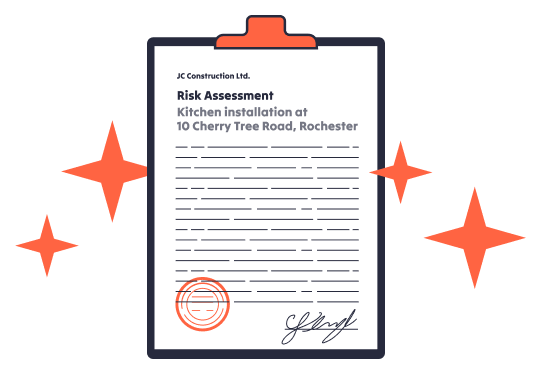
Anyrisks produces a fully written, UK-compliant blacksmithing and forge day risk assessment referencing the Health and Safety at Work Act 1974, the Management of Health and Safety at Work Regulations 1999 and PUWER 1998 where relevant.
3. Instant download and use
Download as PDF and Word. Hand it to event organisers, landowners, insurance providers or local authority event licensing teams. Include it in your public liability insurance application or file it for HSE compliance purposes. £29, no subscription.
What it covers
Every blacksmithing and forge day risk assessment is written in full — covering all metalworking, fire and site hazards relevant to your setup.
Burns from hot metal, forge fire and radiant heat
Fire risk from forge sparks and hot metal chips
Eye injury from flying scale during hammering
Manual handling of heavy hammers, anvils and metal stock
Use of tongs, hammers, chisels and other hand tools
Quenching hazards — steam, splashing, thermal shock
Participant supervision and instructor-to-participant ratios
PPE provision — leather aprons, heat-resistant gloves, safety glasses
Safe working distances around forge and anvil
Ventilation and smoke extraction in enclosed forge spaces
Coal, coke or gas forge fuel handling and storage
Trip hazards from tools, metal stock and uneven ground
First aid provision for burns and cuts
Emergency procedures — fire, serious injury, participant distress
Works for
From knife making courses to heritage forge demonstrations, Anyrisks covers every type of blacksmithing experience day.
What customers say
"I run monthly knife making days on my farm. The assessment covered everything — hot metal, forge fire, PPE, supervision ratios. My insurance company accepted it immediately."
Tom R.
Blacksmith and forge experience provider, Devon
"We do school visits with a portable forge. Anyrisks covered outdoor setup, wind direction for smoke, child supervision and emergency burns procedures. Perfect for our needs."
Claire W.
Heritage craft educator, Yorkshire
"I run corporate team building forge days. The risk assessment included manual handling, tool safety and participant ratios — everything the venue and my insurer asked for."
Dave M.
Blacksmith and forge day organiser, Wales
Anyrisks vs DIY templates
| Anyrisks | DIY / Templates | |
|---|---|---|
| Written in full — not a blank form | ✓ | ✗ |
| Covers hot metal work and forge fire hazards | ✓ | ✗ |
| Participant supervision and PPE requirements included | ✓ | ✗ |
| References MHSWR 1999 and PUWER 1998 | ✓ | ✗ |
| Tailored to your forge setup and participant type | ✓ | ✗ |
| Manual handling and tool safety controls | ✓ | ✗ |
| Ready in under 2 minutes | ✓ | ✗ |
| Instant PDF and Word download | ✓ | Sometimes |
Frequently asked questions
Do I need a risk assessment for a blacksmithing experience day?
Yes — if you are running a forge day, workshop or blacksmithing experience for paying customers, you have a duty under the Health and Safety at Work Act 1974 and the Management of Health and Safety at Work Regulations 1999 to conduct a written risk assessment. This applies whether you run occasional events or regular courses.
Does it cover hot metal work and forge fire safety?
Yes — describe your forge setup (coal, coke, gas), the type of metalwork being undertaken, and the workspace layout. The assessment will cover burns from hot metal, fire risk from the forge, sparks, scale ejection, and safe handling of tongs and hammers.
What if participants are beginners with no metalworking experience?
Mention that participants are beginners or hobbyists and the assessment will include supervision requirements, tool safety briefings, PPE provision (leather aprons, gloves, safety glasses), and safe working distances around the forge and anvil.
Does it cover manual handling of heavy tools and metal stock?
Yes — describe the weight and size of hammers, anvils, metal stock and any other equipment participants will handle. The assessment will include manual handling controls and safe lifting techniques for both instructors and participants.
Can I use it for outdoor forge demonstrations?
Yes — mention that the forge is set up outdoors and describe the site (field, showground, festival). The assessment will cover public safety, wind direction affecting smoke and sparks, trip hazards from uneven ground, and weather-related risks.
Is it accepted by event organisers and insurance providers?
Yes — Anyrisks produces a fully written, regulation-referenced risk assessment in the standard format expected by event organisers, landowners, local authorities and public liability insurers. The format is professional and widely accepted.
Does it cover both instructor and participant risks?
Yes — the assessment covers risks to the instructor (repetitive strain from hammering, prolonged heat exposure, lifting heavy tools) and risks to participants (burns, eye injury from scale, incorrect tool use). Supervision and instruction controls are included.
How long does it take?
Under 2 minutes. Describe your forge setup, the type of experience day, participant numbers and skill level, and Anyrisks produces a complete, UK-compliant blacksmithing risk assessment instantly.
Also see: The ultimate guide to risk assessment · Do I need a risk assessment? · Risk assessment legal requirements · Risk assessment generator