
Home › Library Risk Assessment
Library Risk Assessment — Generated Instantly for £29
Describe your library — public branch, mobile van, school library or community reading room. We generate a fully written, UK-compliant risk assessment covering shelving, manual handling, lone working and public access in minutes.
Built for public libraries, school libraries, mobile library services and volunteer-run community libraries

📚 Got high shelving, kick stools, book trolleys or staff working alone at closing time? Mention it — we'll include the specific controls needed for manual handling, working at height and lone working.
Legal requirements for libraries
Under the Health and Safety at Work etc. Act 1974, those running a library — whether a council, school, charitable trust or volunteer committee — have a duty to protect staff, volunteers and visiting members of the public from harm. The Management of Health and Safety at Work Regulations 1999 require a suitable and sufficient assessment of risk under Regulation 3(1), and a written record is a legal requirement once five or more people are employed.
The Manual Handling Operations Regulations 1992 apply directly to library work, given the repeated lifting of books, boxes and trolleys involved in shelving and stock management. The Workplace (Health, Safety and Welfare) Regulations 1992 cover shelving stability, aisle widths, flooring and lighting — all relevant to safe public access in a library. The Regulatory Reform (Fire Safety) Order 2005 also applies, given the significant quantity of paper stock typically held on site.
HSE guidance notes that slips, trips and manual handling remain among the most common causes of workplace injury across the service sector, both of which are routine considerations in a library environment. A clearly documented risk assessment demonstrates compliance and provides a practical reference for staff and volunteers.
How It Works
1. Describe your library
Tell us the type of library, staffing levels, shelving layout and any specific activities such as children's story time, mobile rounds or public computer access. Mention lone working if staff or volunteers work alone.

2. Let the app take the strain
Anyrisks produces a fully written, UK-compliant library risk assessment referencing the relevant regulations and covering all significant hazards on site.
3. Instant download and use
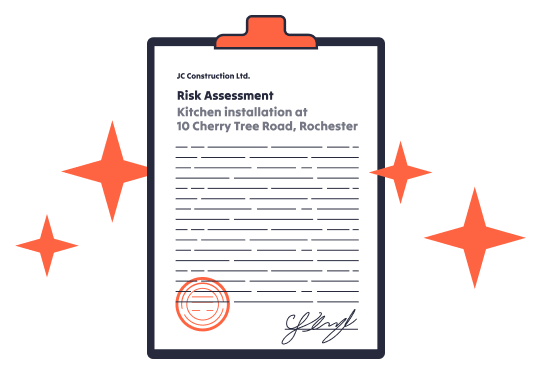
Download as PDF and Word. Share it with trustees, committee members or your local authority, and keep it on file for inspection purposes. £29, no subscription.
What It Covers
Every library risk assessment is written in full — covering all hazards relevant to running a safe, accessible library.
Slips, trips and falls from flooring, trailing cables and wet entrances
Manual handling of books, boxes and book trolleys
Working at height using kick stools and step ladders for high shelving
Falling stock from overloaded or unstable shelving units
Fire risk from paper stock, storage areas and electrical equipment
Lone working during opening, closing or quiet periods
Public access and crowd flow in reading and study areas
Children's areas — story time, play equipment and supervision
Public computer and IT equipment electrical safety
Security — cash handling, lost property and challenging behaviour
First aid provision and accident reporting arrangements
Mobile library vehicle safety and roadside stopping procedures
Accessibility for visitors with disabilities or mobility needs
Fire evacuation procedures for staff, volunteers and the public
Works For
From council branches to school reading rooms, Anyrisks covers every type of library setting.
Anyrisks vs DIY templates
| Anyrisks | DIY / Templates | |
|---|---|---|
| Written in full — not a blank form | ✓ | ✗ |
| Management of Health and Safety at Work Regulations referenced | ✓ | ✗ |
| Covers manual handling of books and stock | ✓ | ✗ |
| Addresses shelving stability and falling stock | ✓ | ✗ |
| Covers lone working for staff and volunteers | ✓ | ✗ |
| Suitable for public, mobile and school libraries | ✓ | ✗ |
| Ready in under 2 minutes | ✓ | ✗ |
| Instant PDF and Word download | ✓ | Sometimes |
Frequently Asked Questions
Also see: The Ultimate Guide to Risk Assessment · Do I Need a Risk Assessment · Risk Assessment Legal Requirements · AI Risk Assessment Generator
Do libraries legally need a written risk assessment?
Yes, if you employ five or more people, Section 3 of the Management of Health and Safety at Work Regulations 1999 (Regulation 3(1)) requires a written record of the significant findings. Even small libraries and community reading rooms with fewer staff should carry out and record an assessment, as it is required under the Health and Safety at Work etc. Act 1974 and is routinely requested by councils, trustees and insurers.
What are the main hazards in a library setting?
Common library hazards include slips and trips from loose flooring or trailing cables, manual handling injuries from lifting and shelving books and boxes, falls from height when using kick stools or step ladders to reach high shelves, falling stock from overloaded or unstable shelving, and fire risk from paper stock and electrical equipment. Lone working during quiet hours or mobile library duties is also a key consideration.
Does this cover mobile and school libraries as well as public ones?
Yes. Describe the setting — public library branch, mobile library van, school or university library, or a volunteer-run community library — and the assessment will be tailored to reflect the specific layout, footfall and staffing arrangements involved.
How does a library risk assessment differ from a village hall or church hall assessment?
Libraries carry additional hazards not typically found in general hall hire, including heavy static shelving, book trolleys, repetitive manual handling of stock, and public computer or study areas. A library-specific assessment addresses these alongside the general premises risks such as fire, electrical safety and public access covered in a village hall risk assessment.
Does it cover manual handling of book stock?
Yes. Manual handling of boxes, trolleys and shelving stock is one of the most common causes of injury in library work. The assessment references the Manual Handling Operations Regulations 1992 and sets out controls such as trolley use, team lifting and safe shelf heights.
Can it include lone working for staff or volunteers?
Yes. If library staff or volunteers work alone during opening or closing, mobile library rounds, or quiet periods, mention this and lone working controls — including check-in procedures and emergency contact arrangements — will be built into the assessment.
Is this suitable for volunteer-run or community libraries?
Yes. Many smaller libraries are run by volunteers, parish councils or charitable trusts rather than paid staff. The assessment is written in plain English so trustees and volunteer coordinators can understand and action it without specialist health and safety knowledge.
How long does it take to generate?
Under two minutes. Describe your library setting and activities, and Anyrisks produces a complete, regulation-referenced risk assessment ready to download as PDF and Word.