
Home › Healthcare & Wellness › Massage Therapy Risk Assessment
Massage Therapy Risk Assessment — Generated Instantly for £29
Describe your massage practice — mobile or clinic-based, treatment types, products used and working environment. We generate a fully written, UK-compliant massage therapy risk assessment covering manual handling, COSHH, lone working and all relevant health and safety regulations in minutes.
Used by mobile massage therapists, clinic owners, sports therapists and holistic practitioners across the UK

💆 Work alone or visit clients at home? Mention it — we'll include lone working procedures, check-in systems, personal safety measures and emergency contact protocols specific to mobile massage practice.
Legal requirements for massage therapists
Under the Health and Safety at Work Act 1974, all massage therapists — whether self-employed, employed or operating from shared premises — have a legal duty to assess and control health and safety risks. This applies to solo practitioners working from home just as much as it does to multi-room clinics. A written risk assessment is the foundation of compliance.
The Management of Health and Safety at Work Regulations 1999 (Regulation 3) require a suitable and sufficient risk assessment for all work activities. For massage therapists, this means documenting hazards including repetitive strain injury from sustained pressure and postures, slips and trips in treatment areas, manual handling of portable massage tables and equipment, and exposure to massage oils and aromatherapy products.
If you use massage oils, essential oils, cleaning products or sanitisers, the Control of Substances Hazardous to Health Regulations 2002 (COSHH) require you to assess the risks from these substances and implement appropriate controls. This includes proper storage, dilution guidance, ventilation, skin contact prevention and first aid procedures for allergic reactions or spills.
Mobile massage therapists working alone in clients' homes or corporate settings face additional risks covered by lone working guidance from the HSE. While there is no specific "lone working regulation", the duty under the Health and Safety at Work Act extends to these situations — requiring documented procedures for personal safety, check-in systems and emergency protocols.
How it works
1. Describe your practice
Tell us whether you work from a clinic, visit clients at home, operate from a home studio, or work at multiple locations. Mention the types of massage you provide (sports, deep tissue, holistic, pregnancy), any oils or products you use, and whether you work alone. If you carry portable equipment or couch, mention that too.

2. Let the app take the strain
Anyrisks produces a fully written, UK-compliant massage therapy risk assessment covering manual handling, repetitive strain, COSHH, slips and trips, lone working (if applicable), and client-related risks such as medical contraindications and vulnerable clients.
3. Instant download and use
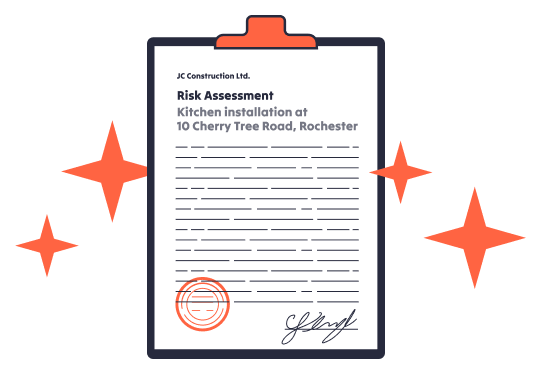
Download as PDF and Word. Submit it to your insurance provider, professional body (FHT, CNHC, SMA), landlord or venue manager, or keep it on file for compliance purposes. £29, no subscription, money-back guarantee within 24 hours.
What it covers
Every massage therapy risk assessment is written in full — covering all clinical, manual handling and environmental hazards relevant to your practice.
Manual handling — lifting and carrying portable massage tables and equipment
Repetitive strain injury — sustained pressure, thumb and wrist overuse
Postural strain — bent postures during treatment sessions
Treatment table height adjustment and ergonomic positioning
COSHH — massage oils, essential oils, aromatherapy products
Skin contact and allergic reaction risk from oils and lotions
Slips and trips — oil spills, trailing cables, cluttered treatment areas
Lone working — mobile therapists visiting clients' homes
Client-related risks — medical contraindications, vulnerable clients, safeguarding
Fire safety — emergency exits, candles, oil burners (if used)
Hygiene and infection control — couch covers, towels, hand hygiene
Data protection and confidentiality — client records and GDPR compliance
Electrical safety — heated blankets, oil warmers, music equipment
Working from home — public liability, room layout, access and egress
Works for
From mobile sports therapists to holistic clinics, Anyrisks covers every type of massage practice.
What customers say
"I'm a mobile sports therapist and needed something for my insurance renewal. Anyrisks covered lone working, manual handling of my portable couch and all the COSHH stuff for my oils. Done in minutes."
Tom R.
Sports massage therapist, Bristol
"My landlord asked for a risk assessment before I could start renting the treatment room. Anyrisks gave me exactly what I needed — professional, specific to my practice, and accepted immediately."
Emma L.
Holistic therapist, Manchester
"I run a small clinic with two treatment rooms. Anyrisks covered everything from fire exits to essential oil storage. My professional body and insurance company were both happy with it."
Rachel K.
Clinic owner, Edinburgh
Anyrisks vs DIY templates
| Anyrisks | DIY / Templates | |
|---|---|---|
| Written in full — not a blank form | ✓ | ✗ |
| Covers mobile and clinic-based practice | ✓ | ✗ |
| Manual handling and repetitive strain controls included | ✓ | ✗ |
| COSHH assessment for oils and products | ✓ | ✗ |
| Lone working procedures for mobile therapists | ✓ | ✗ |
| Accepted by insurance providers and professional bodies | ✓ | Sometimes |
| Ready in under 2 minutes | ✓ | ✗ |
| Instant PDF and Word download | ✓ | Sometimes |
Frequently asked questions
Does it cover both mobile and clinic-based massage practice?
Yes — describe whether you work from home, in a clinic, visit clients' homes, or work at corporate locations. Mobile massage therapists will receive specific lone working controls, while clinic-based assessments will cover reception and treatment room hazards. Both are fully supported.
Are COSHH requirements for massage oils and products included?
Yes — if you use massage oils, essential oils, aromatherapy products, cleaning products or sanitisers, mention them and the assessment will include COSHH controls covering storage, dilution, skin contact, inhalation risk and spillage procedures.
Does it cover repetitive strain injury and manual handling risks?
Yes — massage therapists face significant risk of upper limb disorders from repetitive movements, sustained postures and applying deep pressure. The assessment includes manual handling controls, postural guidance, treatment table height adjustment and rest break requirements.
Can I use it for sports massage, deep tissue or remedial therapy?
Yes — describe the type of massage therapy you provide and any specific techniques (deep tissue, trigger point, myofascial release, sports massage). The assessment will reflect the physical demands and injury risk specific to your practice.
Is the format accepted by insurance providers and professional bodies?
Yes — Anyrisks produces a professional, regulation-referenced risk assessment in the standard format expected by insurance providers, professional bodies (FHT, CNHC, SMA), landlords and venue managers. The format meets UK compliance standards.
How long does it take to generate?
Under 2 minutes. Describe your massage practice, working environment and any specific treatments you offer — Anyrisks produces a complete, UK-compliant massage therapy risk assessment instantly.
Also see: Mobile Foot Health & Chiropody Risk Assessment · The ultimate guide to risk assessment · Do I need a risk assessment? · Risk assessment legal requirements · Risk assessment generator