
Home › Agriculture › Smallholding Risk Assessment
Smallholding & Hobby Farming Risk Assessment — Generated Instantly for £29
A smallholding risk assessment covers livestock handling, machinery use, chemical storage, lone working on remote land and all the specific hazards of small-scale farming. If you employ anyone — even casually — or claim farming tax relief, you need a written risk assessment. Describe your smallholding activities and we'll generate a fully written, UK-compliant assessment in minutes.
Used by hobby farmers, smallholders, lifestyle farmers and agricultural micro-businesses across the UK

🐑 Keeping livestock? Mention the species, number of animals and handling activities — we'll include livestock crush risks, zoonotic disease controls, ram and bull safety, and safe working in pens and handling facilities.
Legal requirements for smallholders
The Management of Health and Safety at Work Regulations 1999 require employers to carry out a suitable and sufficient risk assessment. If you employ anyone on your smallholding — including casual workers, family members or apprentices — you must have a written risk assessment. This applies even if employment is seasonal or part-time.
The Health and Safety at Work Act 1974 imposes a general duty of care on all employers and self-employed persons to ensure, so far as is reasonably practicable, the health, safety and welfare of employees and others who may be affected by the work. For smallholders, this includes farm visitors, delivery drivers, contractors and members of the public using footpaths crossing your land.
Additional regulations apply to specific smallholding activities: the Control of Pesticides Regulations 1986 requires training and safe use procedures for anyone applying pesticides; the Provision and Use of Work Equipment Regulations 1998 (PUWER) requires machinery to be maintained and guarded; and the Lifting Operations and Lifting Equipment Regulations 1998 (LOLER) apply to lifting equipment such as front loaders, telehandlers or hoists used for feed handling.
HSE statistics show that agriculture has one of the highest rates of fatal injury of any industry in Great Britain, with an average of 21 deaths per year. The most common causes are being struck by moving vehicles (including tractors and ATVs), falls from height, and being injured by animals. A written risk assessment is the foundation of safe smallholding practice and is essential for farm assurance compliance, insurance claims and demonstrating due diligence in the event of an incident.
How it works

1. Describe your smallholding
Tell us about your land, livestock (species and numbers), machinery (tractors, ATVs, power tools), chemicals you store, whether you work alone, and any specific activities such as shearing, lambing, hay making or woodland management. Mention public access if footpaths cross your land.

2. We write your assessment
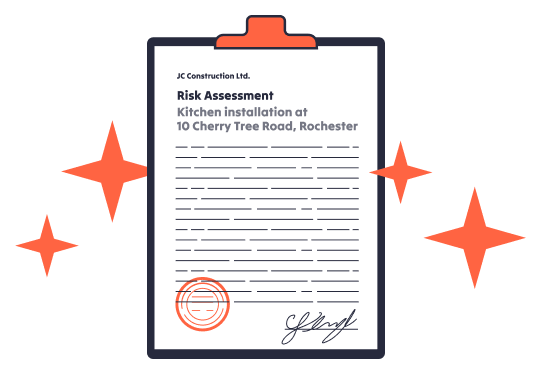
Anyrisks produces a fully written, UK-compliant smallholding risk assessment covering livestock handling, machinery safety, chemical storage, lone working, manual handling and all relevant regulations. Every hazard is documented with practical control measures.
3. Instant download and use
Download as PDF and Word. File it for compliance, hand it to your insurer, submit it to farm assurance auditors, or use it to train family members and casual workers. £29, no subscription, ready in under 2 minutes.
What it covers
Every smallholding risk assessment is written in full — covering livestock, machinery, chemicals, lone working and all site-specific hazards.
Livestock handling — sheep, goats, pigs, poultry, cattle, horses
Aggressive or unpredictable animal behaviour — rams, bulls, stallions
Zoonotic diseases — control measures and hygiene procedures
Tractor and ATV operation — rollover risk, crush zones, PTO shafts
Machinery use — chainsaws, rotavators, mowers, power tools
Manual handling — feed bags, hay bales, fencing materials
Chemical storage and use — pesticides, herbicides, veterinary medicines
Lone working on remote or isolated land — emergency procedures
Working at height — ladder use, roof repairs, tree work
Slips, trips and falls — muddy yards, uneven ground, icy conditions
Public access and footpaths — livestock around walkers and dogs
Fire risk — fuel storage, hay barns, electrical installations
Confined spaces — silos, slurry pits, water tanks
Working near water — ponds, streams, ditches, troughs
Works for
From backyard chickens to multi-acre mixed farms, Anyrisks covers every type of smallholding activity.
What customers say
"I needed a risk assessment for Red Tractor assurance. Anyrisks covered livestock handling, tractor work and chemical storage in one document — auditor accepted it without question."
Andrew T.
Smallholder, Herefordshire
"We have a small flock of rare breed sheep and work alone most of the time. The assessment included lone working controls and ram handling safety — exactly what we needed for insurance."
Rachel M.
Hobby farmer, North Wales
"First time employing casual labour for lambing. Anyrisks gave me a proper risk assessment covering zoonotic disease, manual handling and working in pens — took 90 seconds to generate."
Simon P.
Lifestyle farmer, Scottish Borders
Anyrisks vs DIY templates
| Anyrisks | DIY / Templates | |
|---|---|---|
| Written in full — not a blank form | ✓ | ✗ |
| Covers livestock, machinery and lone working | ✓ | ✗ |
| Includes COSHH and pesticide controls | ✓ | ✗ |
| UK legislation referenced (MHSWR, PUWER, COSHH) | ✓ | ✗ |
| Suitable for farm assurance audits | ✓ | ✗ |
| Zoonotic disease controls included | ✓ | ✗ |
| Ready in under 2 minutes | ✓ | ✗ |
| Instant PDF and Word download | ✓ | Sometimes |
Frequently asked questions
Do I need a risk assessment for a smallholding?
Yes — if you employ anyone (including casual labour, apprentices or family members), you have a legal duty under the Management of Health and Safety at Work Regulations 1999 to carry out a written risk assessment. Even if you work alone, a risk assessment demonstrates due diligence and is essential for insurance purposes, farm assurance schemes and livestock movement compliance.
Does it cover livestock handling and animal welfare?
Yes — describe the animals you keep (sheep, goats, pigs, poultry, cattle, horses) and the handling activities (feeding, shearing, dipping, veterinary procedures, loading). The assessment will include livestock handling risks, zoonotic disease controls, manual handling of feed and equipment, and safe working with gates, pens and fencing.
What about machinery and tractor work?
Yes — mention the machinery you use (tractors, ATVs, rotavators, chainsaws, mowers, power tools) and the assessment will cover machinery guarding, PTO shaft safety, rollover protection, safe refuelling, crush zones and working alone with machinery. Quad bike and tractor rollover risks are specifically addressed where relevant.
Is lone working included?
Yes — smallholders often work alone on remote land. Mention that you work alone and the assessment will include emergency communication procedures, mobile phone coverage, check-in arrangements, lone working near water or livestock, and emergency access planning.
Does it cover pesticide and chemical use?
Yes — describe any pesticides, herbicides, veterinary medicines, disinfectants, fuels or fertilisers you use. The assessment will include COSHH controls, storage requirements, PPE, safe application procedures and environmental protection measures in line with the Control of Pesticides Regulations 1986 and the Control of Substances Hazardous to Health Regulations 2002.
Can I use it for farm assurance schemes?
Yes — farm assurance schemes (Red Tractor, RSPCA Assured, Soil Association Organic) require documented risk assessments. Anyrisks produces a professional, UK-compliant risk assessment in the standard format expected by assurance auditors and Rural Payments Agency inspections.
Does it cover tenanted land or common grazing?
Yes — describe the land arrangement (owned, tenanted, common grazing, rented paddock) and any shared access or facilities. The assessment will include access risks, shared infrastructure, boundary responsibilities and any specific controls required under tenancy agreements.
What about public access and footpaths?
Yes — if your smallholding has public footpaths, bridleways or permissive paths crossing it, mention this. The assessment will include controls for livestock around public access routes, signage requirements, dog walking risks and your duties under the Countryside and Rights of Way Act 2000.
Also see: The ultimate guide to risk assessment · Do I need a risk assessment? · Risk assessment legal requirements · Risk assessment generator